It feels like a lifetime ago that the original Intel X25-M SATA SSD landed on my desk. As the first mainstream consumer SSD, it was easily the most significant development in PC storage in decades. While the industry has moved toward lightning-fast NVMe solutions, SATA drives are still going strong, proving they aren't just relics of a bygone era.
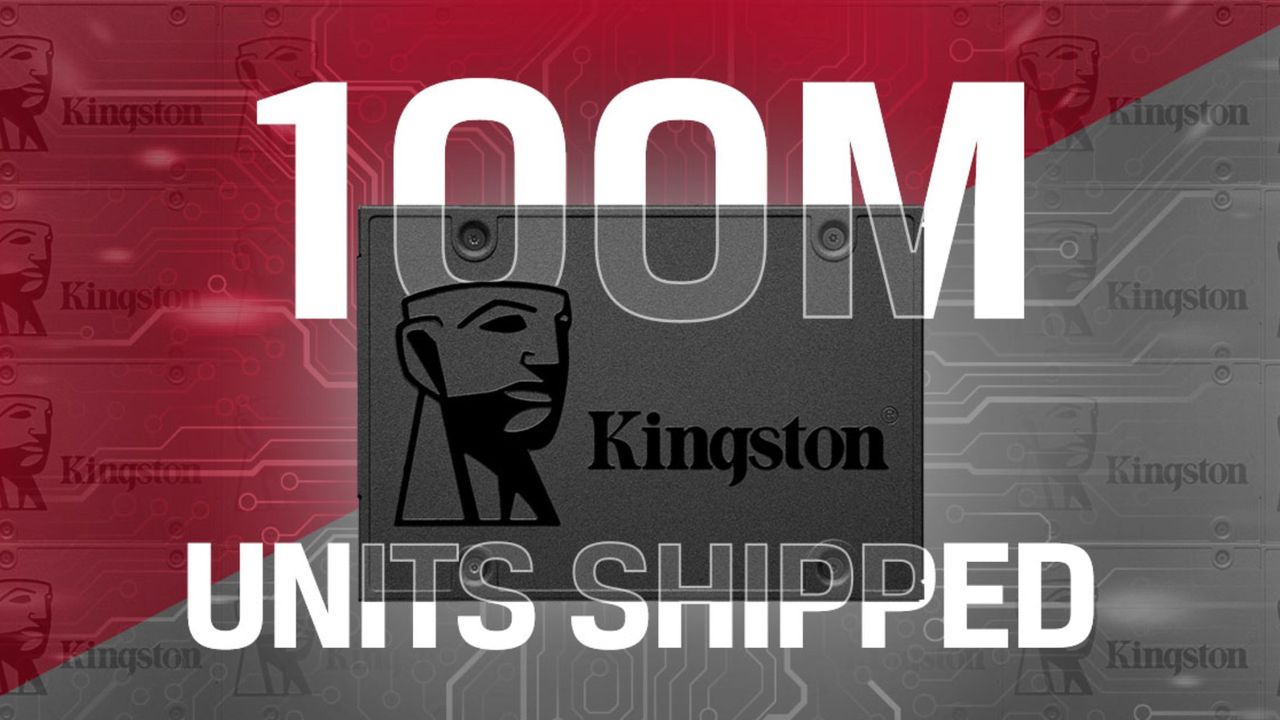
Kingston recently announced a massive milestone: they have shipped 100 million units of their A400 SATA SSD since its launch. Despite hitting the market in 2017, the A400 remains available today in 240GB, 480GB, and 960GB capacities.
The Enduring Value of Kingston A400 SATA SSDs
While the performance specs might seem modest at first glance, it is important to frame them correctly. The 960GB model claims read speeds of 500 MB/s and write speeds of 450 MB/s. By modern standards, these numbers are pedestrian; cutting-edge PCIe Gen 5 drives can theoretically offer 25 times that raw bandwidth.
However, the real comparison for a SATA SSD isn't against an M.2 drive, but against "antediluvian" mechanical hard drives (HDDs) with spinning magnetic platters. For many users, these drives are absolute "life savers" for breathing new life into older hardware.
Consider the impact on gaming performance and system responsiveness:
- HDD Load Times: In a Starfield loading test, an old-school HDD took 218 seconds to load a level.
- SATA SSD Load Times: The same task dropped to just 19 seconds with a SATA drive.
- Gen 5 NVMe Load Times: Even the fastest Gen 5 drive only shaved that down to just under 15 seconds.
When you look at the data, the jump from an HDD to a SATA SSD provides the vast majority of the perceived performance boost. The difference between a SATA drive and a top-tier NVMe drive is often marginal in real-world loading scenarios.
Why SATA Drives Maintain Relevance in 2026
Beyond pure speed, there are practical architectural reasons why SATA drives are still going strong in modern builds. One major factor is PCIe lane availability.
Because PCIe-based SSDs consume lanes that are often shared with your GPU, they can be a precious and limited commodity—especially on lower-spec motherboards. Using SATA for secondary mass storage allows you to preserve those valuable lanes for other components.
While recent fluctuations in SSD pricing mean the A400 might not feel like the bargain it once was, perspective helps. When the Intel X25-M launched, an 80GB model cost over $500. Today, paying roughly $190 for ten times that capacity is a different reality entirely, even if it sits near the price of a decent Gen 4 M.2 drive. For storage expansion and legacy PC upgrades, the SATA format remains a vital tool in any builder's arsenal.