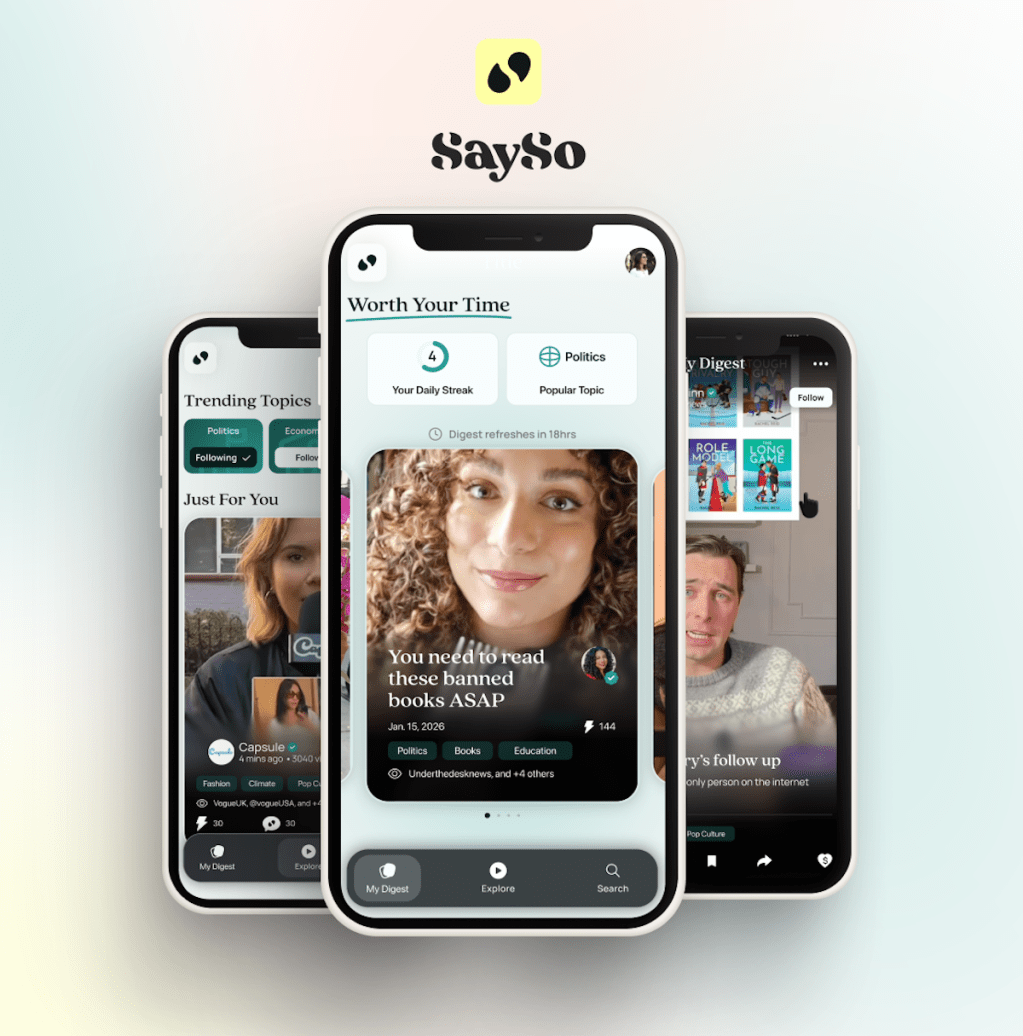
A thumb swipes upward through a stream of crisp, high-definition video clips—not an endless loop of dance trends or unboxing videos, but a focused report on congressional financial dealings. There is no jarring transition to a sponsored meme or AI-generated nonsense; instead, each clip concludes with a clear, verifiable source citation appearing on screen. This is the intended experience of SaySo, a new short-form video app that aims to restore users’ trust in news by pivoting away from the dopamine-fueled chaos of traditional social feeds.
Why SaySo is a New Short-Form Video App That Aims to Restore Users’ Trust in News
The current state of social media consumption is defined by profound fragmentation. Platforms like TikTok, Instagram, and YouTube have become primary news sources for millions, yet they are increasingly plagued by misinformation and "AI slèm"—low-quality, algorithmically generated content that clutters feeds.
This fatigue is compounded by a broader collapse in institutional trust; recent data suggests that only about 56% of U.S. adults maintain any level of trust in national news media. SaySo seeks to address this crisis by replacing the "infinite scroll" with a structured, curated experience.
The app’s primary feature, the Daily Digest, allows users to select specific interest areas such as politics, public health, crime, or social issues. Rather than an endless stream of unpredictable content, the app provides a set selection of videos that refreshes every 20 hours. This design choice is a deliberate attempt to reduce digital overwhelm and promote mindful consumption.
Engineering Veracity Through Rigorous Moderation
The technical backbone of SaySo relies on a rigorous approach to content integrity. Unlike traditional platforms where content can go viral before it is even vetted, SaySo utilizes a moderation queue to ensure that most problematic material is caught prior to reaching the user's feed.
According to CTO Dion Bailey, the platform employs a hybrid model of human and AI moderation to validate sources and maintain high editorial standards. To foster an environment of accountability, the app enforces several strict requirements for its creators:
- Mandatory Source Attribution: Every video must include direct links or citations to the information presented.
- Human-in-the-loop Verification: Content undergoes scrutiny through a moderation queue to prevent the spread of unverified claims.
- Community Accountability: The platform is developing "community notes," a crowdsourced fact-checking tool that allows users to flag inaccuracies.
By making source transparency a prerequisite for publication, SaySo is attempting to rebuild the fundamental contract between news providers and their audiences.
Building a Sustainable Creator Economy
At its core, SaySo is an experiment in whether a new breed of journalism can thrive without predatory monetization models. The app is the flagship product of Caliber, a company formerly known as The News Movement, which rebranded in 2025 to focus specifically on short-form journalism.
CEO Ramin Beheshti, who brings significant industry experience from his time at Dow Jones, is positioning the platform as a partner to independent journalists. The initial cohort of creators represents a mix of investigative specialists and subject-matter experts, including:
- Nico Agosta: Known for deep dives into the financial dealings of U.S. Congress members.
- Dr. Victoria: Focuses on the intersections of racial justice and social change.
- Isabel Ravenna: An independent journalist with a background in reputable outlets like National Geographic.
While specific details regarding long-term revenue splits remain undisclosed, Beheshti has confirmed that many early creators are participating as founding partners and receiving stipends. The company is currently building out a full monetization infrastructure designed to ensure the majority of generated revenue flows directly back to the creators.
The Verdict
SaySo enters a market that is deeply skeptical of new social platforms, yet its timing is undeniably strategic. As the digital landscape becomes increasingly saturated with synthetic media and algorithmic noise, there is a palpable demand for curated, high-signal environments.
While the app’s success will ultimately depend on its ability to scale its creator base without sacrificing its rigorous moderation standards, its focus on intentionality over engagement provides a much-needed blueprint for the future of digital news. With a planned expansion into the U.K. this summer and further global markets through 2027, the industry will be watching closely to see if "slow news" can survive in a fast-moving world.