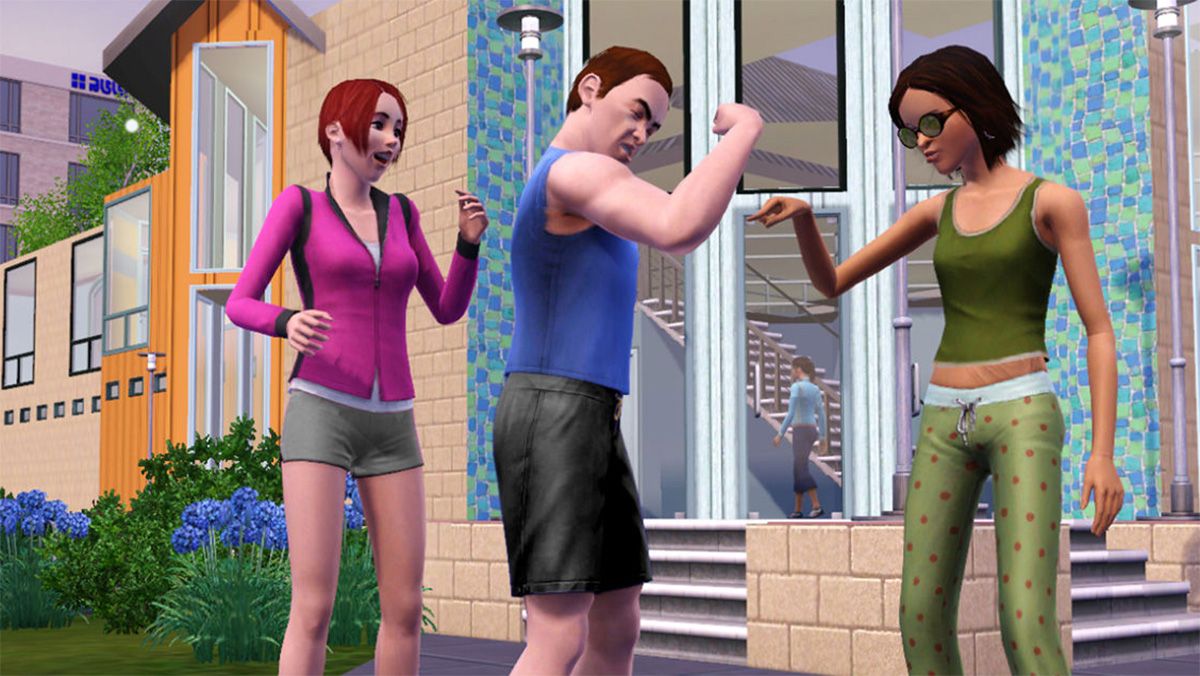
The Sims 3 Review: A Living Sandbox
My wedding was a disaster, beginning when one of the guests died during the party. We weren’t close, but witnessing his ghost prompted a recurring wish to see more. Soon I was wandering the catacombs beneath the graveyard, getting emotionally scarred by zombie bears. I emerged smeared with dirt and wearing only my underpants.
To make matters worse, I misunderstood the purpose of a 'Wedding Party'. It’s not meant to celebrate the engagement, but to be the wedding itself. My guests left unhappy when no marriage took place. Both my fiancée and I felt guilty for missing our big day. That ‘I’ is me—a smaller, virtual but no less hairy me. The Sims 3 is ultimately about controlling people. This review originally appeared in PC Gamer issue #202 (UK, July 2009).
Core Mechanics and Free Will
Released on June 2, 2009, this title arrives as the second sequel in a life-simulator franchise that has moved over 100 million copies worldwide. You begin by moulding your Sim’s appearance and selecting five personality traits. You then drop them into a modest, two-bedroom suburban home. Those days of playing as an incorporeal maid are finally gone.
Set your Sim’s free will to full, and they will independently manage their own needs. They will handle specific requirements without your intervention:
- Hunger
- Social
- Bladder
- Hygiene
- Energy
- Fun
You can stick the game on fast forward and wander off. Return later to find your characters have showered, used the toilet, and headed to work entirely on their own.
The Wish System and Player Freedom
The game replaces the wants and fears system from The Sims 2 with a dynamic wish system. These goals appear in two distinct forms. Lifetime Wishes are chosen during character creation and are strictly limited by your selected personality traits. Along the way, smaller, situational wishes pop up based on your Sim’s daily life. You can dismiss them or promise to make them happen.
There is no punishment for failure, but accomplishing these goals gathers Lifetime Happiness points. You can trade these points for special rewards like fertility treatments that increase the chance of having twins or triplets. Wishes don’t just give your play direction; they provide meaning. They create a compulsive loop of skill improvement, promotions, and purchases.
Exploring Sunset Valley in The Sims 3
Broadly defined, players generally fall into one of three roles. The Narcissist creates lives in lovingly accurate detail. The Soap Writer crafts tales of illicit affairs and melodrama. The Sociopath locks Sims in a room and watches them starve. When you model Sims on yourself and your loved ones, it changes how you play entirely. I only want a quiet, comfortable life for my Sim, Graham.
The great flaw of the series remains unchanged in this sequel. Accomplishing this goal eventually renders the game boring. Each day becomes rote. You go to work, come home, help the kids, kiss your wife, go to bed, and start over. In lieu of chaotic events, I started hitting fast forward to chase more compelling anecdotes.
A Truly Connected Town
The game’s biggest technical leap is Sunset Valley, the only town shipped with the base game. While The Sims 2 had destinations beyond your house, visiting them meant enduring discouragingly long load screens. Now, your hometown is exactly that: an explorable environment you can traverse on foot, by bike, or by car. While you run your Sims, others are living, dying, and breeding all around you.
Each location serves a distinct purpose. Tom’s Lifetime Wish is to become a Creature-Robot Cross Breeder, so he gets a job at the science facility. Tim wants to be an international secret agent and starts by working at the police station. If you have the funds, you can become a partner or owner of these local businesses. Tim also bought the diner, naming it Tim's House of Meat-Like Byproducts. He became a director of the local hospital, and his wages kept the entire household fed on spaghetti.
A Timeless Sandbox Experience
We know from every other storytelling medium that the most interesting lives involve suffering. My next creations are still inspired by the real world, but I’m far more willing to lead them toward heartbreak. Meet Ross, Tim, Craig, Tom, and Tony, five bachelors sharing a two-bedroom house. Each is shabbily designed in the insanely detailed Create-a-Sim tool. I put myself in there, too. I couldn’t resist.
Reviewing this title reveals a game that fundamentally shifted the life-simulator genre. It demands patience, but rewards curiosity with emergent storytelling. Whether you are playing on a 2GHz Dual Core processor with 2GB of RAM and a 128MB 3D card, or navigating modern standards, the core loop remains intoxicating. The game costs £35 or $50 at launch. Its true value lies in the infinite possibilities it hands to the player. You are not just building a house; you are curating a life.