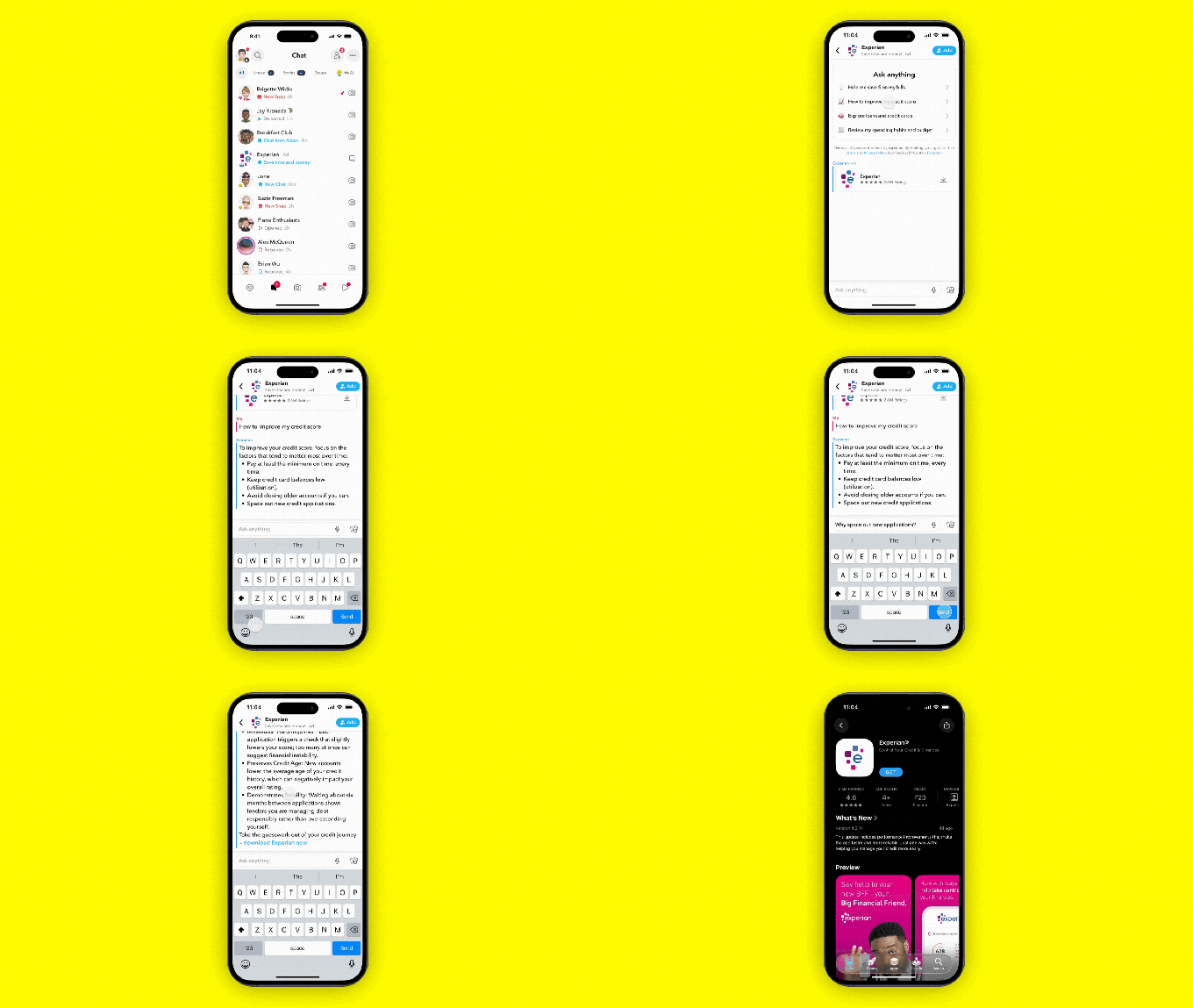
With over 950 billion chats sent through Snapchat in the first quarter of 2026 alone, the platform has established a massive ecosystem for digital interaction. Now, Snapchat brings AI-powered conversational advertising to its app via the rollout of "AI Sponsored Snaps." This new format aims to transform traditional, passive advertisements into an interactive dialogue between users and brand-controlled AI agents.
Moving from Static Ads to Interactive Dialogue
By placing these ads directly within the app’s primary Chat tab, Snap is attempting to bridge the gap between social networking and direct-response commerce. Unlike previous iterations of Sponsored Snaps, which functioned as relatively static touchpoints, this new format allows users to query brand agents directly.
Users can now seek product recommendations, ask specific technical questions, or receive real-time assistance without ever leaving their existing conversation threads. This level of integration ensures that the advertising experience remains fluid and contextually relevant to the user's current activity.
The Strategic Impact of AI-Powered Conversational Advertising
The integration of generative intelligence into the advertising stack marks a departure from the traditional "interruption" model of marketing. Ajit Mohan, Chief Business Officer at Snap, has identified conversation as the most valuable emerging real estate in the modern advertising landscape. By leveraging AI, brands can move beyond simple impressions and toward meaningful engagement that mirrors natural human behavior.
The economic incentive for this transition is already visible in the platform's existing metrics. Current Sponsored Snappads have demonstrated a 22% increase in conversions while maintaining a nearly 20% lower cost per action. As Snapchat brings AI-powered conversational advertising to its app, brands can target the moment of highest intent: the point of inquiry.
Key Advantages for Global Brands
The new infrastructure allows companies to bring their own proprietary AI agents onto the platform, effectively extending their customer service and sales departments into the Snapchat ecosystem. This capability offers several distinct advantages:
- Direct Engagement: Brands can provide immediate answers to complex product queries, reducing friction in the consumer journey.
- Personalized Recommendations: AI agents can analyze user intent within a chat context to suggest relevant products.
- Cost Efficiency: The ability to drive conversions with lower costs per action makes this a highly scalable solution.
- Native Integration: The format is designed to feel like a natural part of existing social habits rather than an external disruption.
Targeting High-Frequency Demographics
The strategic importance of this rollout lies in Snapchat’s ability to capture and monetize highly active, mobile-first demographics. The platform's data reveals a deeply ingrained habit of frequent messaging that is uniquely suited for conversational commerce. This is particularly true for the younger cohort, where social interaction is almost entirely mediated through text and media sharing.
The scale of this engagement is reflected in several key statistics:
- Approximately 57% of teen users engage in daily messaging on the platform.
- Four out of every ten teenagers message others multiple times per day.
- Over half a billion users have already interacted with Snapchat’s native AI chatbot since its 2023 launch.
Because the community has already demonstrated an openness to interacting with automated agents, the barrier to entry for brand-led AI is significantly lower than on traditional, static social feeds.
Navigating the Friction of AI in Private Spaces
Despite the clear economic advantages, the expansion of AI into private chat environments is not without potential friction. As generative intelligence becomes increasingly layered over personal communication, there is an inherent tension between useful automation and intrusive advertising.
Users may find the presence of brand agents in their primary Chat tab to be a disruption of the "sacred" space reserved for friends and family. The success of this initiative will ultimately depend on how seamlessly these agents can mimic the natural flow of casual conversation.
If the technology feels like an interloper, it risks driving users away from the core utility of the app. However, if Snap maintains its promised "native" feel, it may successfully redefine the boundaries of social commerce for the next decade.