Sweden Blames Russian Hackers for Attempting 'Destructive' Cyberattack on Thermal Plant
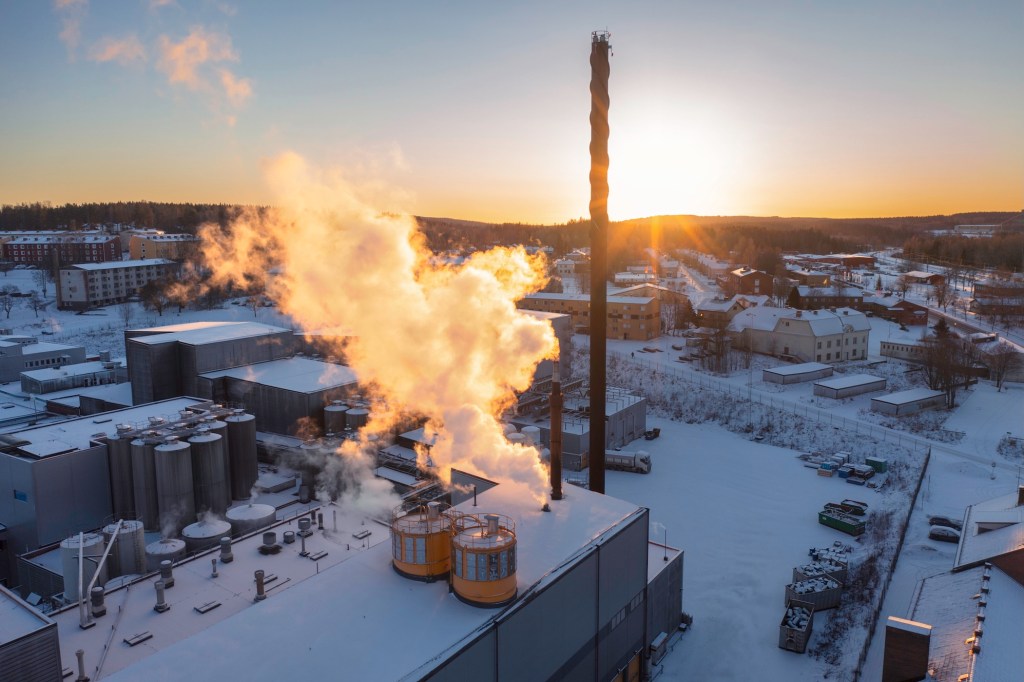
The hum of the grid suddenly cuts to silence as critical cooling pumps stall, leaving a city's thermal infrastructure teetering on the brink of a freeze. In Sweden, that theoretical nightmare nearly became reality when a sophisticated group linked to Russian hackers attempted to breach the control systems of a major thermal power plant last year. While this specific destructive cyberattack was ultimately thwarted by an automated defense mechanism, the incident serves as a stark reminder that the digital battlefield has expanded from data theft to physical destruction.
Sweden’s Minister of Civil Defense, Carl-Oskar Bohlin, confirmed during a recent press conference that this disruption attempt occurred in early 2025 and traced the digital fingerprints back to operatives with deep ties to Russian intelligence services. This marks a significant escalation in hybrid warfare tactics, where cyber operations are explicitly designed to cause destructive real-world consequences rather than just financial loss or data exfiltration.
The Evolution of Hybrid Warfare Tactics
Bohlin described the incident as part of a disturbing trend where pro-Russian groups are transitioning from carrying out denial-of-service attacks—which simply knock services offline—to launching weapons intended to physically damage infrastructure. "Pro-Russian groups that once carried out denial-of-service attacks are now attempting destructive cyber attacks against organizations in Europe," Bohlin stated, highlighting a sharp shift in the adversary's playbook.
The specific target remains unnamed by Swedish officials, but the nature of the attack underscores the vulnerability of critical infrastructure to state-sponsored actors who operate with increasing recklessness. The attempt was blocked not by human intervention, but by a pre-existing protection mechanism embedded within the plant’s operational technology systems. This suggests that legacy industrial control systems may have finally found the resilience needed to counter modern threats.
This event follows a chilling pattern of Russian aggression against European energy and water assets:
- In December 2025, Russia was accused of attempting to collapse parts of Poland's power grid through similar vector-based attacks.
- Earlier that same year, hackers briefly hijacked control systems at a Norwegian dam, opening floodgates and releasing millions of gallons of water before being ejected from the network.
- In early 2024, a cyberattack on a municipal energy company in Lviv, Ukraine, left hundreds of apartments without heat for two days during freezing temperatures.
The Swedish government’s attribution points to a coordinated strategy where cybersecurity threats are no longer isolated incidents but components of a broader geopolitical campaign aimed at destabilizing public services and eroding civilian confidence.
The Cost of Digital Vulnerability in Europe
While the Russian government spokesperson declined to comment on TechCrunch's inquiries, the implications for European energy security are profound. The attack on Sweden is not an isolated anomaly but rather a continuation of a strategy that has already caused widespread disruption in Ukraine since 2015, when similar tactics first blacked out power grids across the country.
The failure of the Swedish plant to suffer catastrophic damage does not diminish the severity of the threat; rather, it highlights how close Europe came to a hybrid attack that would have rendered a significant portion of its population without heat during winter months. The fact that the attackers were repelled by an automated system suggests that defensive postures are evolving, but it also reveals that the window for such attacks remains dangerously open.
Experts warn that as adversaries refine their methods to bypass traditional firewalls and intrusion detection systems, the line between cyber warfare and kinetic military action continues to blur. The ability of a small group of hackers to disrupt a nation's thermal output forces governments to reconsider how they harden industrial control networks against sophisticated state actors who are willing to test the limits of destruction.
A Grim Horizon for Critical Infrastructure
As Sweden processes the details of this attempted sabotage, the message from Stockholm is clear: the era of cyberattacks limited to data theft and financial fraud has ended. The current landscape demands that nations treat cyber resilience as a matter of national survival, with energy grids, water treatment facilities, and transportation networks serving as high-value targets for those seeking to wield digital weapons in the physical world.
The Swedish incident serves as both a warning and a testament to the efficacy of proactive defense, yet it leaves policymakers grappling with how to protect systems that are increasingly interconnected and vulnerable to destructive interference. Without continued investment in detection capabilities and automated response protocols, the risk of a successful attack causing genuine harm remains high.
The coming years will likely see an acceleration of these hybrid threats as geopolitical tensions continue to rise, making it imperative for critical infrastructure operators to assume that every digital gateway is under siege by actors who view destruction as a strategic objective rather than collateral damage.