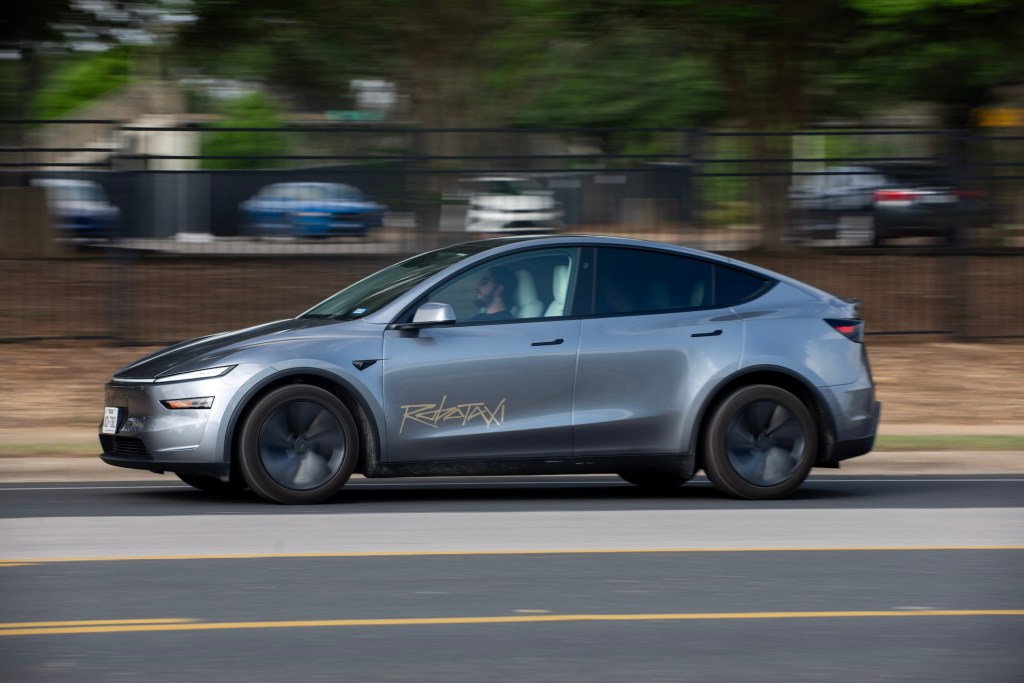
The Fragile Safety Net: Tesla Robotaxi Teleoperator Crashes Revealed
The promise of teleoperation as a seamless safety net for autonomous vehicles faces a stark reality check. Recent unredacted crash reports submitted to the National Highway Traffic Safety Administration (NHTSA) reveal that Tesla’s Robotaxi fleet has experienced at least two incidents where human remote intervention failed to prevent a collision. These events, occurring in Austin, Texas, challenge the narrative that teleoperators can effortlessly master the chaotic physics of urban streets.
Instead, these reports highlight a critical vulnerability in Tesla’s current operational model: the significant gap between remote command and real-world mechanical execution. The data suggests that the reliance on teleoperators is not a robust solution for complex urban environments, but rather a temporary crutch masking the limitations of current artificial intelligence.
Mechanics of Remote Failure in Austin
The two specific crashes involving teleoperators occurred in July 2025 and January 2026. Both incidents involved low-speed maneuvering scenarios where the vehicle’s Autonomous Driving System (ADS) could not progress independently, forcing a safety monitor to request remote assistance.
In the July incident, the ADS became stuck, prompting the intervention. The teleoperator took control, gradually increasing speed to attempt a left turn. However, the remote driver drove the vehicle up the curb and struck a metal fence, demonstrating a disconnect between the remote operator's perspective and the physical reality on the ground.
Similarly, in January 2026, a teleoperator intervened when the ADS required additional navigation support. The remote driver proceeded straight but ultimately collided with a temporary construction barricade at approximately 9 miles per hour. While the damage was limited to scraping the front-left fender and tire, the sequence of events underscores a fundamental reliability issue.
The teleoperator did not guide the car around an obstacle; they attempted to drive it through a scenario the system had already failed to resolve. When the physical environment—curbs, fences, and construction zones—does not align with digital maps or sensor data, the delay inherent in remote control becomes a liability rather than an asset.
Tesla’s Data Transparency and Scaling Constraints
Tesla has historically argued that teleoperation allows it to mitigate the need for physical recovery teams. However, these reports suggest that remote piloting is not a foolproof solution. The teleoperator is not a backup driver in the traditional sense but rather a remote navigator reacting to the vehicle's limitations.
Unlike competitors such as Waymo, which have been required to submit detailed crash narratives for years, Tesla has historically redacted these descriptions as confidential business information. The recent release of data covering all 17 recorded crashes provides a clearer picture of the Robotaxi network’s operational reality. While most incidents involve the Robotaxi being struck by other vehicles, the two teleoperator incidents reveal where Tesla’s control logic breaks down.
Other unredacted reports detail additional challenges:
- Static Object Collisions: A Robotaxi clipped its mirrors on other vehicles in September 2025, echoing issues Tesla’s Full Self-Driving software has faced with parking lot bollards and chains.
- Animal Interactions: A failure to avoid a dog running into the street, though the animal escaped unharmed.
- Navigation Errors: An unprotected left turn into a parking lot resulted in a collision with a metal chain.
These incidents accumulate to paint a picture of a system still refining its edge case handling. Elon Musk has admitted that ensuring complete safety is the primary bottleneck to scaling the Robotaxi network. The fact that remote operators are involved in crashes suggests that the "safety net" itself is not yet robust enough to handle the unpredictable nature of urban driving.
The Path Forward for Autonomous Ridesharing
The revelations from NHTSA filings force a reevaluation of how autonomous vehicles are tested and deployed. The reliance on teleoperators implies that Tesla’s ADS is not yet capable of fully resolving its own impasses, a requirement for true Level 5 autonomy.
If a human must remotely guide a car over a curb or around a barricade at low speeds, the system is not autonomous in those scenarios; it is remote-assisted. Tesla’s cautious approach to scaling, while perhaps prudent from a liability standpoint, highlights the immense difficulty of achieving seamless autonomy.
Tesla’s decision to unredact its data may be an attempt to build trust, but the content of those reports reveals that the technology is still in a fragile state. As Tesla expands its Robotaxi network, the question is not just how many cars it can deploy, but how many of those deployments rely on human remote intervention to function. Until the gap between digital planning and physical execution is closed, the teleoperator will remain a necessary, yet imperfect, component of the system.