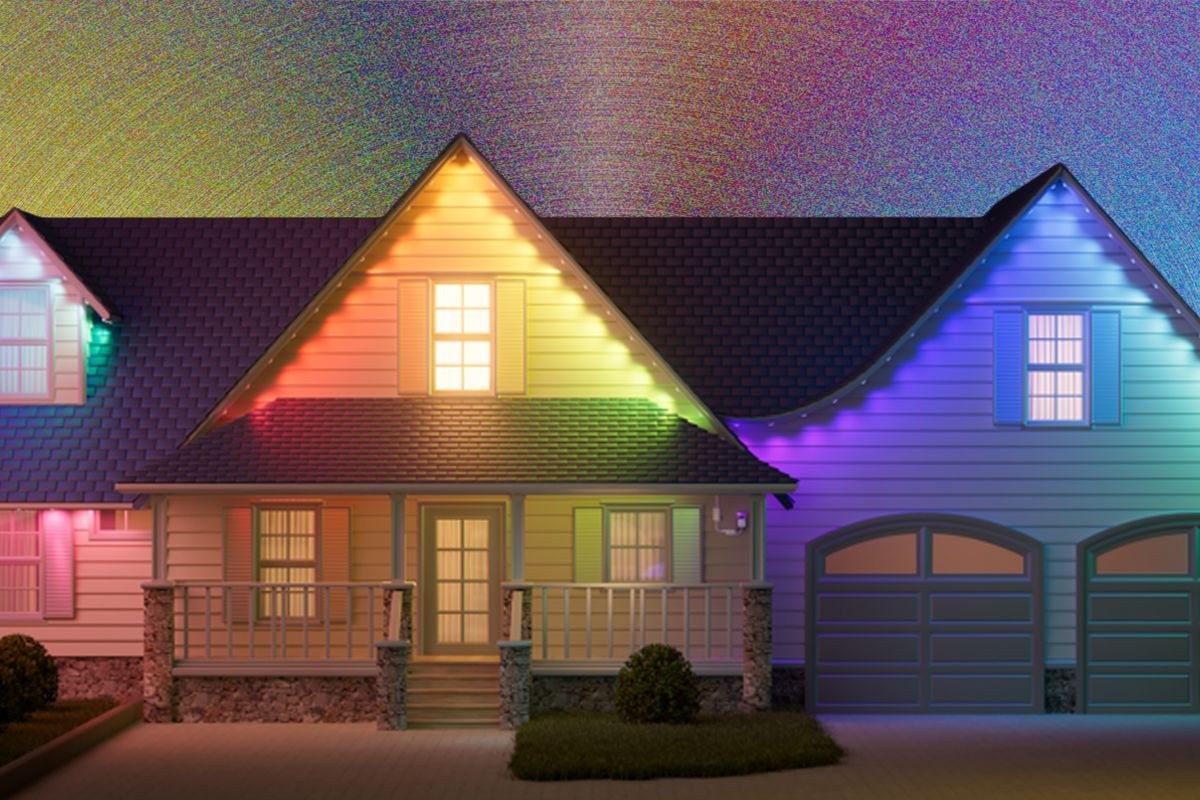
The concept of permanent outdoor lighting contains a fundamental contradiction: these fixtures are engineered to remain static and often invisible until they are called upon to perform their most spectacular, fleeting roles. While the hardware is designed for long-term architectural integration, its true utility lies in its ability to transform a home's identity during temporary events, ranging from mid-winter holidays to summer celebrations. Finding the best permanent outdoor lights represents a growing trend in smart home technology, moving away from seasonal clutter and toward integrated, programmable illumination.
Assessing Architectural Compatibility
Before investing in high-end lighting systems, the physical structure of a home must be evaluated for compatibility. These lighting strips are not universal; they require specific architectural features to ensure both aesthetic concealment and structural stability. The most successful installations rely on roof eaves or porch overhangs that provide a flat surface to hide the wiring and mounting hardware.
Key Requirements for Installation
A successful installation typically requires several key elements:
- Accessible roof eaves, particularly on one- or two-story structures.
- Flat, smooth surfaces such as wood, metal, or cement to facilitate secure adhesion.
- Proximity to power, ideally an outdoor outlet that is protected from direct weather exposure.
- Minimal architectural complexity, as steep angles or lack of eaves can make hiding the light strips nearly impossible.
Homes with stucco exteriors or complex, multi-level designs without continuous eaves present significant challenges. Furthermore, homeowners living in strictly regulated HOA communities must consider whether permanent changes to a building's exterior are permitted. For those with difficult architectural profiles, professional installation may be required to manage the complexities of mounting and power routing.
Top Contenders for The Best Permanent Outdoor Lights
The market for permanent outdoor lighting has matured, moving beyond simple string lights into sophisticated, app-controlled ecosystems. When selecting a system, the ability to cut and splice the lighting strips is perhaps the most critical feature for achieving a professional look on non-standard rooflines.
Govee: The Industry Leader
For those seeking the gold standard in performance, Govee remains the industry leader. Their 100-foot set, priced at approximately $440, offers exceptional customization through its ability to be tailored to specific architectural peaks and gables. For larger estates requiring more coverage, the Govee Outdoor Lights Pro ($760) provides a robust solution for much larger footprints. Both systems utilize highly intuitive apps that allow for preloaded themes and granular control over individual light segments.
Eufy: The Mid-Range Alternative
Eufy offers a compelling mid-range alternative, with 100 feet of customizable lighting available for roughly $300. Like Govee, Eufy’s hardware is designed to be spliced for customized home layouts, making it an excellent choice for those who want high-end features without the premium price tag. However, users should note that certain textured paints may interfere with the adhesive mounting options provided in this kit.
Cync: The Budget-Friendly Entry Point
For budget-conscious decorators, Cync provides a highly accessible entry point at approximately $143 for 100 feet. While it may lack some of the advanced architectural customization found in higher-end models, it offers impressive color variety and ease of installation. This set is particularly well-suited for those looking to add basic curb appeal without a significant upfront investment.
Technical Standards and Long-Term Utility
Reliability in outdoor electronics is dictated by their IP (Ingress Protection) rating. Any permanent lighting system must possess a high enough weatherproofing rating to withstand heavy rain, snow, and temperature fluctuations. It is also vital to ensure that the control box—the brain of the system—is housed in a location that minimizes exposure to extreme elements.
The utility of these lights extends far beyond the traditional holiday season. We are seeing a rise in use cases for sports-themed displays during major tournaments, as well as colorful accents for summer parties and Fourth of July celebrations. As smart home ecosystems become more integrated, the ability to program these lights via voice assistants or automated schedules will likely make them a standard feature of modern home automation.
Ultimately, the decision to move toward permanent lighting depends on the balance between installation effort and long-term convenience. While the initial setup requires careful planning and potentially some drilling into eaves, the result is a versatile, programmable tool that eliminates the annual chore of seasonal decorating. For homeowners with compatible architecture, selecting the best permanent outdoor lights is a significant upgrade in both technology and aesthetic control.