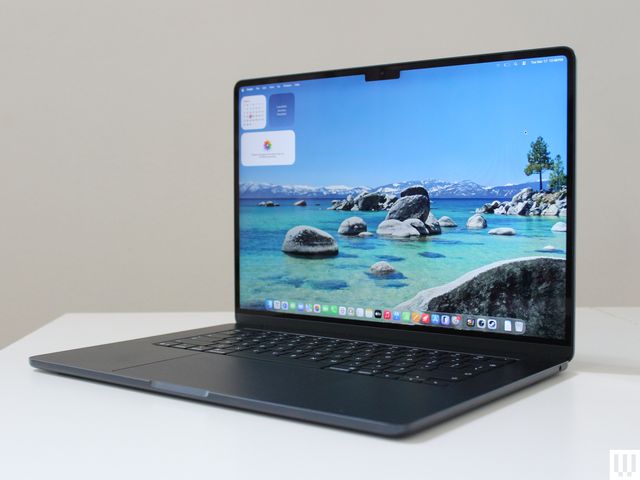
A $150 price reduction has returned the M5 MacBook Air to its lowest recorded cost since its March launch. This dip to $949 represents a rare moment of reprieve in a hardware market increasingly defined by rising costs and supply chain instability. While the premium laptop segment often experiences incremental shifts, this specific drop brings the machine back to a price floor not seen since the product's debut earlier this year.
The M5 MacBook Air vs. the Windows Ecosystem
The value proposition of Apple's silicon-based laptops is currently being reshaped by external supply chain pressures hitting the Windows ecosystem particularly hard. The Surface Laptop 7th Edition, once a formidable competitor that could be found for as low as $799 during major sales events like Prime Day, has seen its price climb to approximately $1,200. This spike is largely attributed to an ongoing RAM shortage impacting the production of high-performance Windows ultrabooks.
At $949, the M5 MacBook Air sits significantly below its primary Microsoft-based rival. This makes it difficult for much more expensive hardware to compete on a pure performance-per-dollar basis. This price volatility suggests that while Apple’s internal hardware roadmap remains stable, the broader economic environment surrounding mobile computing is becoming increasingly unpredictable.
For consumers looking at the mid-range market, the current discount effectively neutralates the competitive advantage of high-end Windows alternatives currently suffering from inflated MSRPs. The current landscape shows a clear divergence between Apple's pricing and the rising costs of its competitors.
Evaluating Apple's Internal Pricing Tiers
The introduction of the MacBook Neo has created a complex pricing dynamic within Apple's own lineup, forcing a closer comparison between their budget and mid-range offerings. As a budget-focused alternative, the Neo was designed to capture the lower end of the market. However, its current pricing structure leaves very little breathing room between it and the flagship Air models.
When the M5 MacBook Air is at its standard retail price, the distinction between the two machines remains clear through both performance and feature sets. However, at this $949 threshold, the gap narrows to a mere $260 difference. This compression of the mid-range market forces consumers to decide if incremental upgrades—such as superior thermal management and display technology—are worth the additional premium over the much cheaper Neo.
Changes to Apple’s Configuration Strategy
The current discount also highlights a significant shift in Apple's configuration strategy that has fundamentally changed how we calculate value:
- The removal of the 256GB base tier means the entry point for the M5 Air is inherently higher than previous generations.
- A $150 discount on the 512GB model effectively mitigates the "entry tax" imposed by Apple's new storage standards.
- Significant savings are also applicable to upgraded configurations, including 1TB SSD and 24GB RAM models, making high-spec machines more accessible.
A New Era of Premium Pricing
The disappearance of the $799 price point for the MacBook Air marks a potential turning point in Apple's pricing philosophy. With the removal of lower-capacity storage options and the strategic deployment of the Neo, the era of ultra-budgeted premium MacBooks may be reaching its conclusion. The industry is moving toward a model where "entry-level" no longer means "bare minimum," but rather a higher-quality baseline that comes at a higher cost.
While this current sale provides immediate relief for budget-conscious buyers, the long-term outlook remains uncertain. If component shortages continue to drive up the cost of Windows alternatives like the Surface series, Apple may find more leverage to maintain higher price floors across its entire lineup. For now, the M5 MacBook Air at $949 represents one of the most compelling hardware deals available in the current computing landscape.