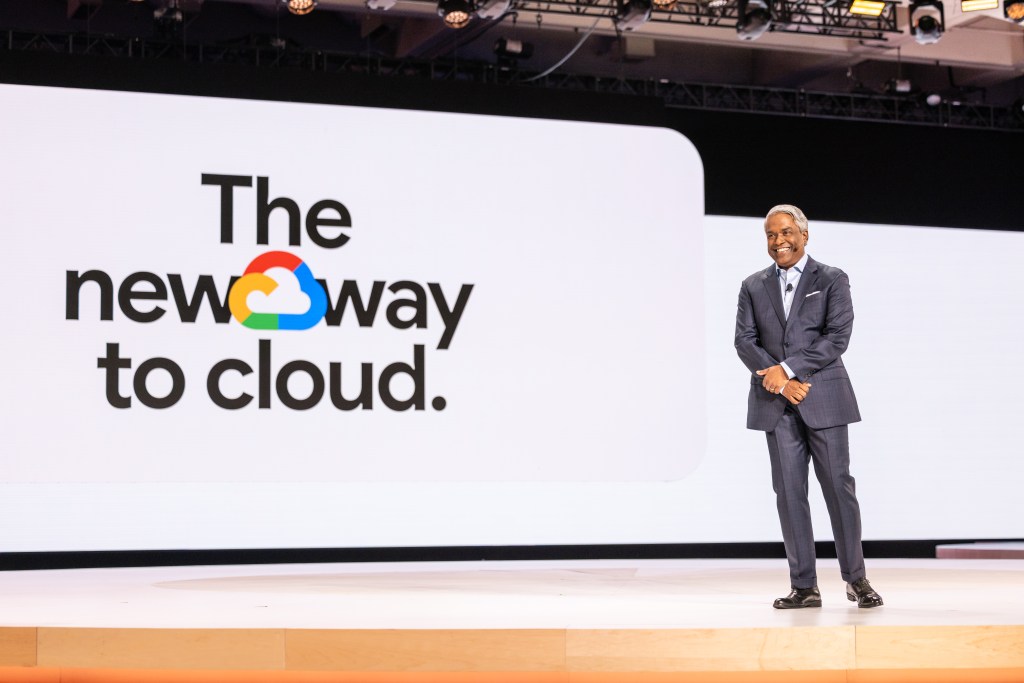
The transition from general-purpose cloud computing to a specialized ecosystem of autonomous AI agents represents the next major frontier in enterprise infrastructure. At Las Vegas's recent tech summit, attendees were eager to discover the most interesting startups showcased at Google Cloud Next 2026, where Google’s strategic roadmap became unmistakable.
Google is no longer just selling storage and compute; it is actively subsidizing the deployment of intelligence. This shift signals a move toward a future defined by functional, autonomous workflows.
Subsidizing the Agentic Revolution
A massive injection of capital is currently being directed toward ensuring that AI agents become a staple of corporate workflows. To facilitate this, Google announced a new $750 million budget specifically designed to empower Cloud partners to sell more AI agents to enterprise clients.
This fund is not merely a collection of cloud credits. It is structured to cover the granular costs of high-level integration, including Gemini proof-of-concept projects, access to Google's forward-deployed engineers, and deployment rebates.
By de-risking the transition for both partners and clients, Google is attempting to cement its infrastructure as the foundational layer for the "agentic" era. The focus is shifting away from simple LLM access toward the creation of autonomous workflows that can execute complex tasks without human oversight.
The Most Interesting Startups Showcased at Google Cloud Next 2026: Coding and Media
While much of the industry focuses on massive foundation models, the startups highlighted at the event are demonstrating how those models translate into high-growth business verticals. Many of the most interesting startups showcased at Google Cloud Next 2026 are focusing on "vibe coding" and generative media to redefine software development.
A standout performer in this category is Lovable, a "vibe coding" startup that reported being on a $400 million ARR track as of early 2026. Lovable is expanding its footprint by launching a new coding agent through Google’s enterprise app marketplace, signaling the rise of natural language as the primary interface for development.
The integration of Google's latest multimodal capabilities is also driving significant valuation leaps:
- Notion: The productivity giant, currently valued at approximately $11 billion, is utilizing Gemini models to power its next generation of text and a image generation features.
- Gamma: This AI-powered "PowerPoint killer" recently reached a $2.1 billion valuation by leveraging Google's Nano Banana 2 image model.
- Inferact: Built by the creators of the widely used vLLM project, this startup is accessing Nvidia GPUs through the Google Cloud stack.
- ComfyUI: This popular open-source tool for multimedia generation is also integrating Nano Banana 2 to enhance its generative capabilities.
Diversified Intelligence Across the Vertical Stack
Beyond coding and productivity, a wide array of companies—among the most interesting startups showcased at Google Cloud Next 2026—are utilizing Google Cloud to automate highly specific industrial processes. This suggests that AI implementation is moving into deep-tech sectors where precision and regulation are paramount.
The following companies represent the growing diversification of the Google Cloud ecosystem:
- Healthcare and Biotech: ExaCare AI provides specialized software for post-acute medical facilities, while Proximal Health automates insurance claims adjudication.
- Logistics and Commerce: ChorusView uses AI smart tags to track goods in real time, and Stord leverages cloud intelligence to manage e-commerce fulfillment.
- Retail and Consumer Experience: Stylitics utilizes AI image generation for automated outfit styling, while Vurvey Labs conducts synthetic market research via autonomous agents.
- Developer Infrastructure: Temporal provides a resilient cloud environment to prevent system failures, and Vapi offers essential tools for building conversational voice agents.
The strategic focus of Google Cloud Next 2026 makes one thing clear: the competition between cloud providers has moved beyond price-per-gigabyte. The new battlefield is defined by which provider can most effectively host the most sophisticated, integrated, and cost-effective agentic ecosystems.