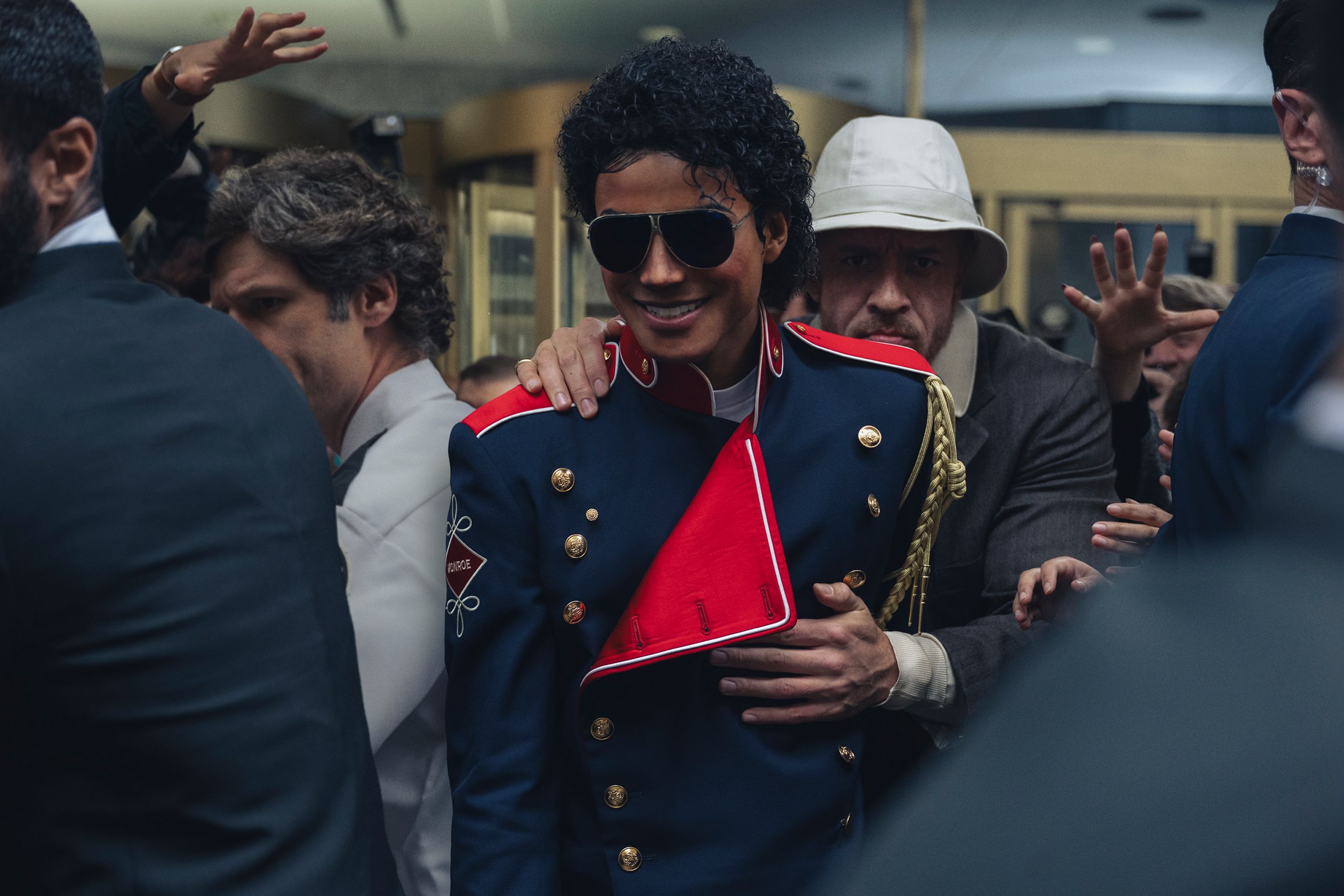
With a projected US box office opening of $70 million, the upcoming biopic Michael is poised to shatter records for the highest-grossing music biography in cinematic history. However, this massive commercial momentum has triggered an online civil war about ‘Michael’ that transcends the silver screen. While the film seeks to celebrate the unparalleled artistry of the King of Pop, it has simultaneously ignited an intense digital debate regarding the ethics of historical erasure and the responsibility of biographical storytelling.
The Architecture of Erasure
The tension surrounding Michael stems less from what is present on screen and more from what has been conspicuously omitted. Directed by Antoine Fuqua, the film focuses heavily on the era-defining ascent to global superstardom, specifically anchoring its narrative arc around pivotal moments like the production of "Thriller."
Yet, this focus comes at a significant cost to historical continuity. Due to legal constraints and the influence of the Jackson estate, much of the most contentious period of Jackson's life has been excised from the final cut. This has resulted in a narrative that effectively concludes its chronological progression around 1988, leaving a massive, decade-long void where Jackson's most controversial allegations and legal battles reside.
Legal Constraints and the Estate’s Influence
Reports indicate that the original version of the film contained a reenactment of the 1993 police raid on Neverland Ranch, a moment intended to ground the film in an era of intense legal scrutiny. However, a settlement with accuser Jordan Chandler reportedly prohibited the depiction of certain experiences, leading to the removal of substantial footage and even an entire third act.
The influence of the estate cannot be overstated because use of Jackson’s legendary catalog was contingent upon their approval. This dynamic has led critics to argue that the film functions more as a curated tribute than a rigorous biography. The result is a version of history that feels polished, rhythmic, and intentionally sanitized.
Inside the Online Civil War About ‘Michael’
The reaction on social media platforms like X and Instagram reveals a deeply fractured audience, split between those attempting to decouple the art from the artist and those demanding total accountability. This ideological struggle centers on how we process the legacies of problematic icons in the modern era.
The debate generally settles into three distinct camps:
- The Preservationists: These viewers argue that Jackson’s musical contributions—including 13 number one singles and two inductions into the Rock & Roll Hall of Fame—should be judged on their own merit, separate from his personal life.
- The Accountability Advocates: This group maintains that any celebration of Jackson's life that ignores the gravity of sexual abuse allegations is a failure of truth and an insult to survivors.
- The Skeptics: A third group focuses on the cinematic quality itself, critiquing the film’s lack of interiority and comparing the experience to walking through a high-budget wax museum.
This division was highlighted by Jackson’s own family members. While some, like nephew Taj Jackson, have moved to reclaim the narrative from the media, others, such as his daughter Paris Jackson, have expressed skepticism toward the film's approach. She suggested it caters to a specific segment of fandom that prefers to live within a sanitized fantasy.
The End of the Monoculture
As the era of the unified cultural narrative continues to dissolve, this online civil war about ‘Michael’ serves as a case study in the fragmentation of truth. In a landscape where audiences can curate their own realities through algorithms and echo chambers, no single film can claim to provide the definitive account of a figure as large as Jackson.
The industry is left watching an interesting phenomenon: a blockbuster that succeeds financially while failing to achieve cultural cohesion. Whether a potential sequel—rumored to explore the darker aspects of Jackson's life—will attempt to bridge this gap remains to be seen. For now, the legacy of Michael Jackson remains a massive, unmovable, and deeply contested monument in the pop culture landscape.