The Surprising MacBook Neo Competitor You’ve Never Heard Of: Why the HP OmniBook 5 Wins on Value
The MacBook Neo's $599 entry point shattered budget laptop conventions, yet it faces a stealthy challenger that consistently outperforms Apple's latest offering. While the tech press dissected the Neo's sleek design and new Snapdragon-powered architecture, the HP OmniBook 5 has been quietly dominating real-world performance benchmarks at a price point that makes the MacBook Neo feel like an overpriced compromise. This surprising MacBook Neo competitor delivers raw specifications and value that Apple simply cannot match in this segment.
Raw Value Proposition: Why the OmniBook 5 Outpaces the Neo on Specs
The HP OmniBook 5 represents a fundamental shift in how Windows laptops compete with macOS devices on price-to-performance ratios. While the MacBook Neo locks users into 8 GB of RAM and a slower SSD at its base tier, the OmniBook 5 arrives with 16 GB of unified memory and a substantial 512 GB storage drive for a fraction of the cost when on sale. This disparity is particularly stark in an era where software bloat makes lower-tier specs feel increasingly obsolete.
The performance implications are immediate and tangible:
- The Qualcomm Snapdragon X processor delivers all-day battery life that rivals or exceeds the Neo, dispelling the myth that Windows devices cannot match Mac sustainability.
- Multicore performance on the OmniBook 5 allows for seamless multitasking without the memory swapping issues that plague the Neo when running multiple heavy applications.
- Users never face the anxiety of closing background processes to free up memory, a common workaround required by the MacBook Neo's limited VRAM allocation.
Price fluctuations for the OmniBook 5 have been aggressive, with the laptop frequently dropping from its $1,050 retail price to around $500 at major retailers like Walmart and Best Buy. Even at the current floor price of roughly $730, the device offers double the memory capacity of the Neo for a similar or lower total cost.
Design, Display, and Connectivity: The Hidden Trade-offs
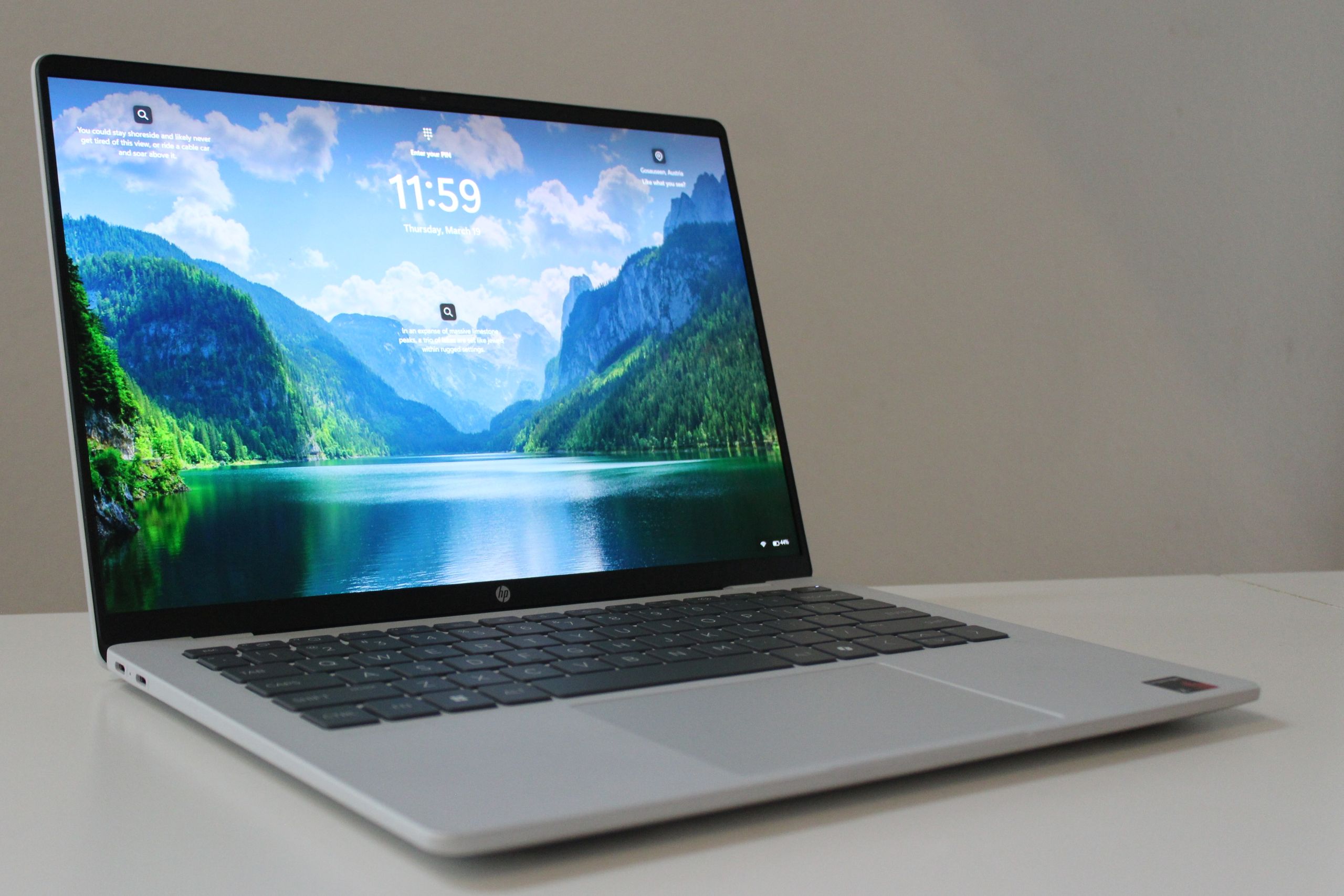
Beyond raw specs, the physical build quality of the OmniBook 5 challenges Apple's design supremacy in surprising ways. At 0.5 inches thick and weighing nearly identical to the MacBook Neo, the HP device proves that Windows laptops can achieve a premium, portable form factor without sacrificing durability. The chassis is constructed from high-quality aluminum, featuring a balanced hinge mechanism that allows for one-handed lid opening—a tactile detail often missing in budget machines.
However, the display remains the primary area where Apple maintains a slight edge. The MacBook Neo boasts a higher resolution panel with 2408 x 1506 pixels and peak brightness reaching 500 nits, making it superior for outdoor visibility and color-critical work. In contrast, the OmniBook 5 utilizes an OLED panel with a slightly lower 1920 x 1200 resolution. Despite the pixel count difference, the OLED technology provides infinitely better contrast ratios and a broader color gamut than standard LCDs found in competing Windows machines like the Asus Vivobook 14.
Connectivity also favors the HP device, which corrects some of the Neo's port limitations:
- Two USB-C ports capable of data transfer speeds up to 10 Gbps, eliminating the outdated USB 2.0 bottleneck found on one side of the MacBook Neo.
- A dedicated USB-A port for legacy peripherals, removing the need for dongles that are often required by Mac users.
- Integrated IR camera with facial recognition for Windows Hello, a security feature absent from the budget-tier MacBook Neo.
The only notable compromise is the trackpad, which feels less precise during complex gesture operations compared to Apple's industry-leading haptics. While not unusable, it occasionally prompts users to reach for an external mouse when precision tasks are required. The keyboard, however, outshines the Neo with a more responsive feel and built-in backlighting, a feature omitted entirely from the MacBook Neo to cut costs.
Final Verdict: Does This Competitor Redefine the Budget Hierarchy?
The narrative that the MacBook Neo is the undisputed king of budget laptops crumbles under the weight of the OmniBook 5's specifications. While Apple retains a strong hold on brand loyalty and ecosystem integration, the OmniBook 5 offers a more liberated experience for users who prioritize performance and future-proofing over logo recognition.
For the discerning buyer willing to navigate fluctuating prices, the HP OmniBook 5 becomes an undeniable recommendation whenever it drops below $730. At that price point, the device transcends its budget classification to become a high-performance machine that challenges the very definition of what a $600 laptop should offer. Apple's entry into the low-end market was a bold move, but HP has answered with a product that makes the Neo look like a cautious experiment in cost-cutting rather than a revolutionary step forward.