Can a Simple Bell Beat Noise-Canceling Headphones?
The evolution of urban mobility has created a paradoxical safety gap: as cyclists become faster and more numerous, the auditory awareness required to prevent collisions is being actively dismantled by the very technology intended to improve personal well-being. This clever bike bell represents the solution to that growing crisis. For over a century, the bicycle bell served as a non-negotiable pillar of street etiquette, relying on a raw, mechanical frequency that cut through ambient noise. Today, however, the widespread adoption of Active Noise Cancellation (ANC) in consumer audio gear has created a perceptive bubble for millions of pedestrians and drivers, effectively muting the warning signals of approaching traffic. This technological shift has left city streets increasingly hostile to those who cannot be heard, turning a simple mechanical device into a critical piece of safety infrastructure designed to bypass digital filters.
The Hidden Frequency Gap in Modern Safety
The core challenge facing urban planners and safety engineers is not a lack of sound, but the specific engineering capabilities of modern noise-canceling headsets. These devices utilize microphones to pick up low-frequency ambient sounds—such as traffic rumble or wind—and generate an inverse wave to cancel them out, creating silence for the wearer. The problem lies in the limitations of this algorithmic approach; while highly effective against steady-state drone and lower frequencies, these systems struggle significantly with specific high-pitched bursts that do not fit the predictable patterns they are designed to suppress.
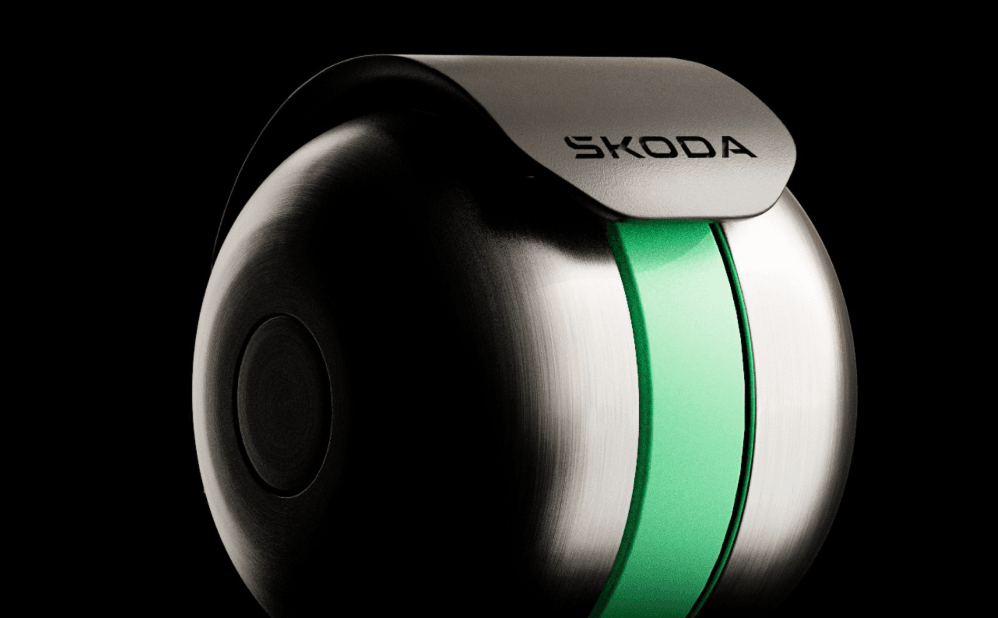
Researchers from Škoda, a brand with deep historical roots dating back to its 1895 bicycle origins, partnered with experts at the University of Salford to identify this vulnerability. Their investigation revealed a critical "safety gap" within the frequency spectrum between 750 and 780 Hz, a range where ANC systems fail to generate effective counter-phase waves. This discovery led directly to the development of the Škoda DuoBell, an analog solution engineered specifically to exploit this acoustic weakness. Unlike traditional bells that rely on a single resonant frequency often easily masked by the very noise they aim to cut through, the DuoBell utilizes a dual-mechanism approach.
Mechanics Over Software: How It Works
The brilliance of the DuoBell lies in its commitment to purely mechanical operation without reliance on batteries, Bluetooth connectivity, or software updates. In a world increasingly dominated by smart accessories and app-controlled hardware, the return to pure mechanics offers a reliability factor that is often overlooked until a failure occurs. The design prioritizes immediate functionality and acoustic clarity over aesthetic minimalism, ensuring that every ring serves as an unmistakable alert rather than a muffled chime.
The device features a hammer mechanism capable of delivering rapid, irregular blows, which creates a complex sound signature that the cancellation algorithms cannot predict or neutralize in real-time. By tuning an additional resonator to operate within that elusive high-frequency band, the bell ensures its message penetrates the digital silence. Testing conducted on the busy streets of London provided concrete data supporting this mechanical philosophy:
- Pedestrians wearing active noise-canceling headphones detected the DuoBell five seconds earlier than with conventional bells.
- The detection range extended to 22 meters, providing significantly more reaction time for both cyclists and pedestrians.
- The irregular, rapid sequence of dings proved harder for ANC systems to filter out compared to steady, single-tone chimes.
These results highlight a broader truth about urban safety: technology that isolates the user from their environment requires countermeasures that exist outside that same digital ecosystem. The DuoBell does not attempt to compete with the volume of a siren or the complexity of an electric horn; instead, it leverages the specific limitations of human hearing and machine processing to create a sound that is physically impossible for ANC headphones to ignore.
The Future of Analog Coexistence
As cities densify and the reliance on personal audio devices grows, the friction between cyclists and pedestrians will only increase unless addressed with equal ingenuity. The success of the DuoBell suggests that the solution to modern problems often lies in revisiting fundamental mechanical principles rather than attempting to patch them with software patches. While pricing and wide availability remain unannounced, the publication of the full study by Škoda marks a significant moment for urban safety innovation. It signals a shift where manufacturers acknowledge that the most effective way to save lives is not always through smarter devices, but through devices that understand the flaws in our current digital protections. The future of street safety may well depend on the ability of simple metal and air to outmaneuver complex algorithms.