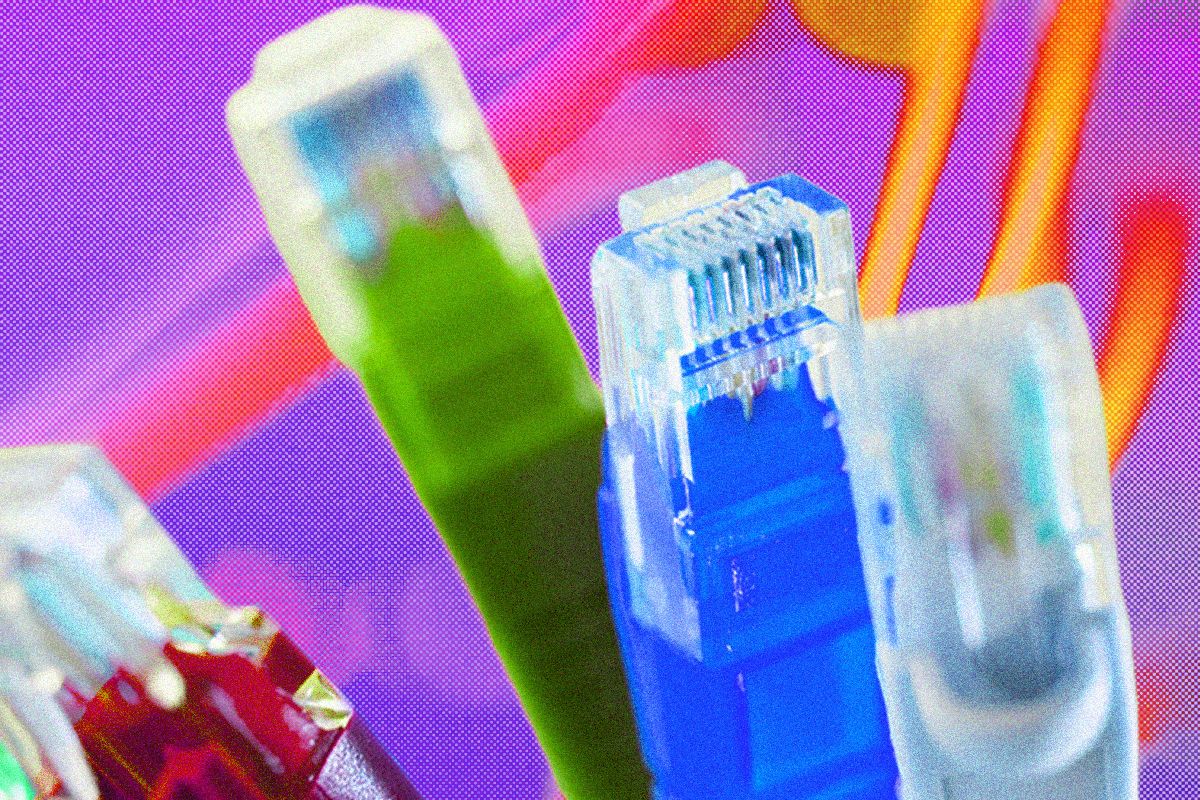
Relying solely on wireless signals for high-performance networking is a gamble that modern digital infrastructure cannot afford to take. While Wi-Fi offers unparalleled convenience, it remains subject to the unpredictable physics of radio frequency interference and signal degradation. Ethernet, by contrast, provides a dedicated, shielded pathway for data, ensuring that bandwidth remains consistent regardless of how many devices are competing for airtime in your environment.
The Evolution of Ethernet Standards
The foundation of modern local area networks (LAN) was laid in 1973 at the Xerox Palo Alto Research Center (PARC). Engineers Robert Metcalfe and David Boggs developed a system that allowed multiple computers to communicate through a shared set of rules, an architecture inspired by the concept of "luminiferous ether."
Although Xerox initially held the trademark, they eventually relinquished it. This allowed the Institute of Electrical and Electronics Engineers (IEEE) to formalize the 802.3 standard in 1983. This openness allowed the technology to proliferate across various manufacturers, ensuring widespread compatibility and easy upgrades.
Since those early days of 10 Mbps speeds, Ethernet has undergone massive transformations. The industry moved through Fast Ethernet (100 Mbps) in the mid-90s and transitioned into the Gigabit Ethernet era around 1999.
As data demands surged with high-definition streaming and cloud computing, standards expanded to support 10 Gbps, 40 Gbps, and even 100 Gbps. While most residential users currently find 40 Gbps to be beyond their immediate requirements, the trajectory remains focused on meeting the massive throughput demands of modern data centers and AI processing.
The Ethernet Advantage Over Wireless
The primary distinction between Ethernet and Wi-Fi lies in the nature of the transmission medium. Wi-Fi operates over shared radio waves, making it susceptible to bufferbloat—a phenomenon where devices fighting for the same wireless channel cause significant latency spikes and packet loss.
In a household with multiple streaming devices, gaming consoles, and mobile phones, this congestion can lead to noticeable lag during critical tasks. A wired connection eliminates this contention by providing each connected device with its own dedicated physical lane.
Beyond speed, security and stability are significantly higher in a wired configuration. Because Ethernet requires physical access to the cable to intercept data, it is inherently more difficult to breach than a wireless signal that radiates through walls.
Furthermore, a wired connection offers consistent throughput and much lower latency, making it the non-negotiable choice for competitive gaming, professional video conferencing, and large-scale file transfers. While Wi-Fi 7 promises speeds that rival wired connections, it cannot yet fully replicate the rock-solid reliability of a physical copper or fiber connection.
Selecting the Right Hardware: Cables and Switches
The performance of a wired network is strictly limited by its weakest link, whether that is a degraded cable, an outdated port, or an undersized switch. When planning a network installation, selecting the correct category of cable is essential for future-proofing your infrastructure.
- Cat 5: Supports speeds up to 100 Mbps; largely obsolete for modern use.
- Cat 5e (enhanced): Capable of up to 1 Gbps; the baseline standard for many older installations.
- Cat 6: Provides up to 1 Gbps with better signal integrity than 5e.
- Cat 6a (augmented): Supports up to 10 Gbps; highly recommended for new installations to ensure longevity.
- Cat 7/7a: Offers higher bandwidth (up to 40 Gbps) but often uses non-standard connectors, making it less practical for home use.
- Cat 8: Designed for data centers, supporting up to 25 or 40 Gbps over short distances.
For larger environments, an Ethernet switch acts as a central distribution point. Unmanaged switches are ideal for plug-and-play home setups, requiring zero configuration. However, for those managing complex networks, managed switches allow for advanced features like traffic prioritization and network monitoring.
Additionally, the implementation of Power-over-Ethernet (PoE) has revolutionized smart home deployment. PoE allows a single cable to deliver both high-speed data and electrical power to devices like security cameras, VoIP phones, and wireless access points, significantly reducing installation complexity.
The Verdict
While the era of wireless ubiquity makes the idea of running cables seem cumbersome, the technical reality remains unchanged: wires win on performance. For any user where latency, stability, or security is a priority, a wired backbone is an essential investment.
As we move toward increasingly bandwidth-heavy technologies, the decision to implement Cat 6a or higher is not merely an upgrade—it is a necessary step in building a resilient digital foundation.