From Reactive Editing to Agentic Design Execution
The trajectory of design software has long been defined by an increasing layer of abstraction, moving from manual pixel manipulation to template-based editing and finally into the era where algorithms interpret intent rather than just commands. For nearly two decades, tools like Canva democratized visual creation by removing the need for professional training, yet the underlying process remained largely reactive: a user identifies a gap, searches for an asset, and manually constructs the output. The current moment marks a definitive pivot from this reactive workflow to one of agentic execution, where the software not only understands the final goal but orchestrates the necessary tools to achieve it autonomously.
This shift places Canva's AI assistant at the forefront of a new design paradigm, proving that artificial intelligence can now call various tools to make designs for you without constant human intervention. Unlike previous iterations that treated AI as a supplementary feature for generating individual assets, this update positions the assistant as a central workflow conductor capable of independent planning and execution.
Canva's AI Assistant: A New Workflow Conductor
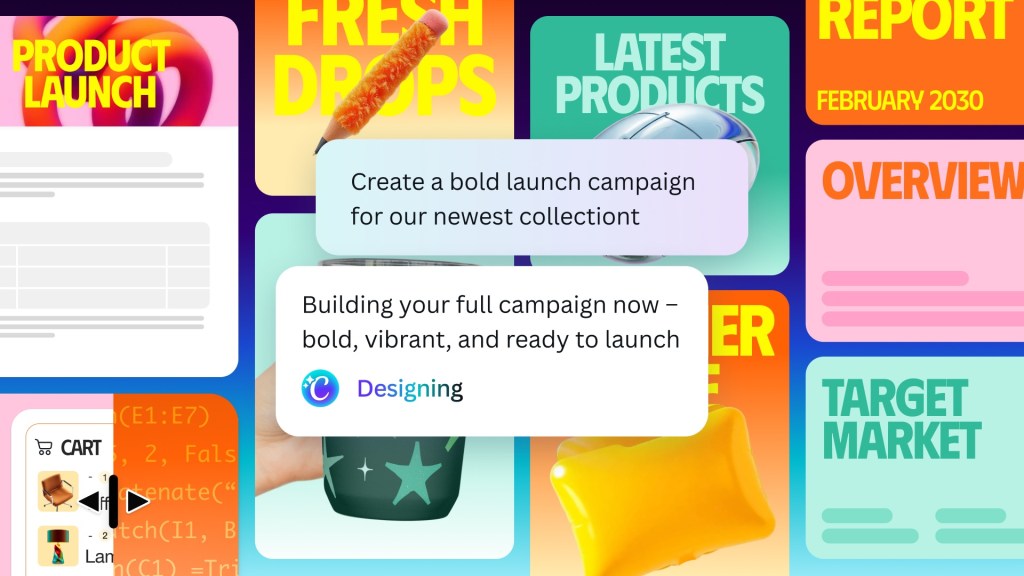
Canva's latest iteration of its AI assistant represents a fundamental shift in how design platforms operate, moving beyond simple text-to-image generation into a realm of tool-calling capabilities. The new system allows users to issue high-level commands—such as "create a social media campaign for our summer sale"—and the AI will independently plan the execution, invoking specific internal tools to generate editable designs layer by layer. This approach mirrors the emerging paradigm in enterprise software where assistants act as intermediaries between user intent and complex application functions, effectively reducing the cognitive load required to manage multiple design tasks.
Key features of this agentic workflow include:
- Layer-Based Generation: The system utilizes layer-based generation, ensuring that the final output remains fully editable rather than locking users into static images. This distinction is critical for professional users who require flexibility to iterate on branding elements without starting from scratch.
- Specialized Tool Invocation: The AI now calls specific tools to handle distinct parts of a design, such as layout adjustments or font pairing, based on the user's initial prompt.
- Parallel Option Generation: Users receive multiple options generated in parallel, allowing them to select and refine the most suitable direction before finalizing.
- Context Retention: The assistant retains context from previous interactions, applying consistent preferences for colors, fonts, and style guidelines across sessions.
Integrating Context and Workflow Automation
The evolution of Canva's capabilities extends beyond isolated design tasks into a broader ecosystem of workflow automation, driven by new integrations with platforms like Slack, Gmail, Google Drive, Calendar, and Zoom. By granting permission to read emails, messages, and meeting data, the AI assistant can build a rich context profile that informs design decisions without requiring manual research or asset gathering from external sources. This contextual awareness allows for more intelligent outputs, such as automatically pulling branding assets from a company drive or referencing specific campaign metrics from a spreadsheet when generating marketing materials.
A significant addition to this suite of features is the introduction of web research skills, enabling the bot to browse the internet in real-time to gather trending design elements, competitor analysis, or up-to-date visual references. This capability transforms the assistant from a passive tool into an active researcher that can inform the creative process with current market data. Furthermore, the platform now supports task scheduling, allowing users to define repeatable workflows—such as weekly social media posts—that run in the background to generate drafts for review and posting.
While these tools offer unprecedented automation, Canva's leadership emphasizes a strategy of collaboration rather than total replacement. Cliff Obrecht, the company's co-founder and COO, notes that while small businesses may operate entirely within the Canva ecosystem, larger enterprises often utilize agentic workflows in other LLM environments. The company has built robust interoperability with Anthropic, Google, and OpenAI, allowing external AI agents to call upon Canva for content generation before returning data to those platforms for final deployment. This positioning suggests that Canva views itself as the specialized "final mile" editor where human-in-the-loop collaboration and deployment strategies are executed.
Performance Metrics and Market Positioning
Underpinning these functional upgrades is a significant investment in model efficiency, with Canva claiming substantial improvements in its proprietary Lucid Origin image-generation model and 12V image-to-video technology. The updated models reportedly operate five times faster and at 30% of the previous cost for images, while video generation has seen a seven-fold speed increase alongside a significant reduction in computational expenses. These performance gains are essential for scaling AI features to millions of users without prohibitive costs or latency issues that could hinder real-time design collaboration.
Financially, this technological pivot coincides with a period of aggressive growth for the company. Obrecht highlighted that while individual creators and small teams remain the core revenue driver, the enterprise business has demonstrated 100% year-over-year growth. With a valuation reaching $42 billion according to PitchBook, the company is signaling a readiness for an initial public offering within the next twelve months, positioning its agentic AI capabilities as a key differentiator in the crowded creative software market.
As the industry grapples with the implications of autonomous design agents, Canva's approach offers a pragmatic middle ground: full automation where it adds value, and deep human control where nuance matters. The launch of Canva AI 2.0 in research preview this week sets the stage for a broader rollout that could redefine expectations for what design software should do. In an era where speed and intelligence converge, Canva's AI assistant stands ready to call various tools to make designs for you, turning complex creative visions into reality with unprecedented ease.