The Ancient Roots of Modern Precision
Is the pinnacle of modern scientific precision merely a sophisticated extension of ancient intuition? We inhabit an era defined by quantum processors, gravitational wave detectors, and particle accelerators that probe the fabric of reality at scales previously unimaginable. These instruments are marvels of engineering, costing billions and requiring teams of specialists to operate.
Yet, beneath the veneer of silicon chips and superconducting magnets, the fundamental mechanics of measurement have not evolved since the days of cubits and sundials. Every data point collected in a laboratory, regardless of its technological complexity, ultimately relies on one of two primitive strategies: counting or comparing.
This reductionist view challenges the notion of technological progress as a linear ascent away from simplicity. Instead, it suggests that while the tools have become exponentially more sensitive, the logic of measurement remains stubbornly rooted in binary choices: is the value higher or lower than a reference? Is the signal present or absent?
The Persistence of Comparison
The concept of comparison is intuitive, even archaic. It requires no complex mathematics, only a standard against which to judge the unknown. When a physicist measures the length of an object, they are not invoking abstract numbers; they are performing a physical alignment. The object is laid side-by-side with a ruler, and the eye scans for the point of convergence. This is a direct, analog comparison.
This principle extends far beyond simple geometry. Consider the sundial, one of humanity’s earliest timekeeping devices. As the sun moves across the sky, a gnomon casts a shadow. The time is not "calculated" by the device but determined by measuring the distance of that shadow from the noon position. The shadow’s length is compared against inscribed markers. The precision varies by latitude, but the underlying mechanism is purely spatial comparison.
Analog instruments continue to dominate many practical applications for this very reason. Key examples include:
- Spring Force Gauges: These translate physical tension into linear extension. A mass stretches a spring, and the length of that stretch is compared to a calibrated scale.
- Balance Scales: Unlike spring scales, which measure gravitational force (weight) and thus vary by location, a balance scale compares the unknown mass against known masses. It isolates mass from gravity, providing a universal standard through equilibrium rather than extension.
The Digital Illusion of Discreteness
If comparison handles the analog world, counting governs the digital one. There is a pervasive misconception that "digital" is synonymous with "electronic." While modern digital instruments are electronic, their defining characteristic is discreteness, not electricity. A digital value cannot take on any continuous range of numbers; it must jump between specific, distinct states.
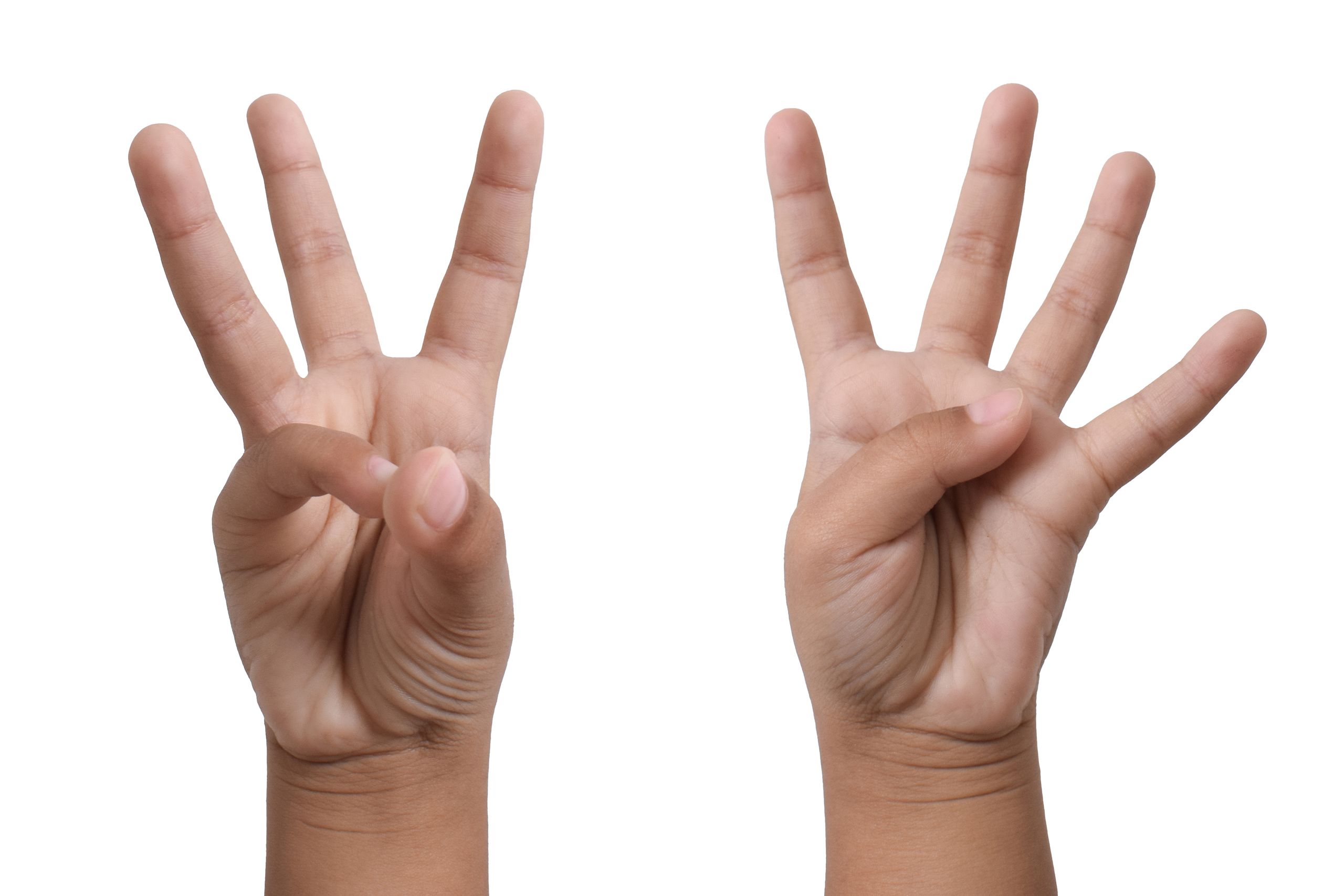
This distinction is visible in the most basic laboratory timers. An old mechanical ratcheting timer does not sweep continuously like the second hand on a clock. It clicks from one discrete value to the next. It counts tenths of seconds, much like counting on fingers. The information is conveyed through discrete increments, making it a digital device despite its lack of circuits.
Modern electronic sensors, such as digital voltmeters, rely on this same logical structure. Voltage, defined as the potential difference between two points, is difficult to measure in absolute terms without a reference. A rudimentary demonstration of this involves using a reference voltage (like a 9-volt battery) and a series of equal resistors. By observing which lights in a circuit illuminate, one can determine the unknown voltage by counting the active elements. If three out of four indicators light up, the voltage is derived from that count.
This method scales to sophisticated sensors. A thermistor changes its electrical resistance predictably with temperature. By running a current through it and measuring the resulting voltage, the sensor converts a physical property into an electrical signal. This signal is then digitized, essentially counting the number of binary units (0s and 1s) required to represent the magnitude. The complexity lies in the transduction—turning heat or light into electricity—but the final act of measurement is still a count.
The Unity of Measurement
The divide between analog and digital instruments is often taught as a fundamental difference in methodology. In reality, they are two sides of the same coin. Comparison provides the reference; counting provides the resolution. Whether measuring the distance across a bridge in "smoots" (a unit derived from a person’s height, famously used by MIT students to measure the MIT Bridge) or determining the temperature of a star via spectral lines, the process is identical.
We compare the unknown to the known, and we count the units of that comparison. The sophistication of our tools does not change the logic; it only expands the range of the known. From the earliest astronomers aligning stones to the latest astronomers analyzing light from the James Webb Space Telescope, the act of measurement remains a dialogue with the physical world, mediated by the simplest possible operations: this is longer than that, or this happens more times than that.
The Future of Fundamental Metrics
As science pushes into the realms of quantum mechanics and cosmology, the reliance on these two techniques becomes both a strength and a limitation. Precision is limited by the granularity of our counts and the stability of our comparisons. We are building better rulers and finer counters, but we are not inventing new ways to measure.
Understanding this unity is crucial for interpreting data. It reminds us that no instrument is a black box that outputs "truth." Every reading is a translation of the physical world into a format we can understand, bound by the ancient, unchanging rules of comparison and counting.