The Olfactory Industry’s Half-Century Stagnation Is Finally Ending
For nearly fifty years, the fragrance industry has remained stubbornly static. Its foundation was built on a limited palette of natural extracts and a handful of synthetic compounds developed in isolated laboratories. This era of creative exhaustion is now facing its most significant technological disruption, driven by a startup that treats scent not as an art form, but as a data problem to be solved.
Patina, a young biotech firm that recently secured $2 million in seed funding from investors including Betaworks and True Ventures, is attempting to rewrite the rules of fragrance creation. By leveraging advanced molecular design and machine learning, the company is targeting the core of the scent industry’s supply chain: the creation of new scent molecules.
Decoding the Biological Language of Scent
The foundation of Patina’s approach lies in its proprietary model, Sense1, which aims to replicate the biological receptors in the human nose. Traditional fragrance description relies on vague, subjective language—terms like "floral," "woody," or "citrusy"—which are inherently inconsistent across regions and languages. This imprecision has historically made it difficult to standardize scent creation or scale production without losing the integrity of the original note.
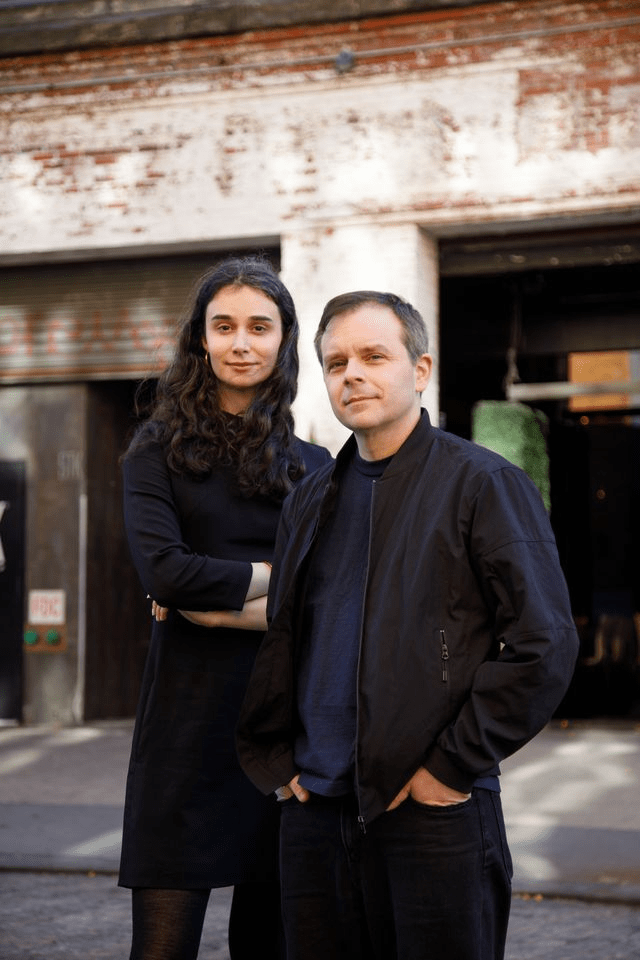
Patina’s founders, Sean Raspet and Laura Sisson, met in 2024 at a scent art gallery in New York, bridging the gap between Raspet’s work as an artist creating new molecules and Sisson’s background in software engineering and olfactory modeling. Their collaboration revealed a critical opportunity: the biological data required to understand how scents interact with human receptors was already present, merely waiting for the computational power to interpret it.
By working at the receptor level rather than the chemical formula level, Patina can:
- Create never-before-smelled molecules.
- Reconstruct the world’s rarest natural ingredients with unprecedented accuracy.
- Simulate scents like rose oil at a biological level, mimicking natural material without plant extraction.
This method has profound implications for sustainability. Traditional rose oil production is water-intensive, land-heavy, and increasingly expensive due to climate change affecting crop yields. Patina’s synthetic alternatives offer a low-carbon solution, consuming significantly less water and petrochemicals while delivering a scent profile that is biologically identical to its natural counterpart.
The Economic and Creative Shift in Fragrance
The fragrance industry has long been protected by a specific intellectual property loophole: while individual scent molecules can be patented, the final perfume formulas themselves cannot. This dynamic has favored large incumbents like Givaudan and Symrise, which have the resources to develop thousands of variations in-house. Smaller companies and independent perfumers have been locked out of true innovation, forced to rely on the existing, limited palette of approved ingredients.
Patina’s technology disrupts this hierarchy by making scent development faster and cheaper. AI-driven models can now generate custom scent ingredients in weeks, a process that previously took years in a physical lab. This shift not only lowers the barrier to entry for new creators but also expands the creative palette available to all perfumers.
Furthermore, the move away from animal testing is another critical advantage. New AI models can predict human-skin reactions with near-perfect accuracy, phasing out the need for traditional safety trials that rely on animal subjects. This aligns with growing consumer demand for clean beauty and ethical production standards, positioning Patina not just as a tech company, but as a necessary evolution in responsible manufacturing.
Building the 'Pantone for Scent'
The long-term vision for Patina extends beyond mere replacement of existing ingredients. The goal is to create a "Pantone for scent"—a universal reference system for olfactory design. Just as the Pantone color system standardized visual communication across industries, a molecular code for smell would allow for precise, reproducible scent creation regardless of geography or manufacturer.
This standardization addresses the immediate supply chain pressures facing the industry. With natural ingredients like bergamot and sandalwood becoming rarer and more volatile in price, the ability to produce consistent, high-quality synthetic alternatives is no longer just a convenience—it is a necessity. Patina’s recent funding will facilitate the launch of new molecules and foster collaborations with academic labs to gather more receptor activation data, further refining the accuracy of Sense1.
As the industry grapples with the dual pressures of sustainability and consumer demand for novel experiences, Patina represents a pivotal shift. It moves fragrance creation from a craft dependent on natural scarcity to a science driven by computational precision. The question is no longer whether scent can be digitized, but how quickly the legacy giants can adapt to a world where anyone with access to the code can create a new smell. The half-century of stagnation is ending, replaced by an era of exponential olfactory innovation.