Ray tracing is undeniably impressive, but it has always been notoriously difficult to implement efficiently. Since the launch of the RTX 20-series, developers have relied on various workarounds to achieve global illumination rather than utilizing true full path tracing. However, new research from Nvidia suggests that the performance cost of this technology might soon be significantly reduced.
Understanding ReSTIR and Its Role in Rendering
To understand this breakthrough, we first need to look at ReSTIR (Reservoir-based spatiotemporal importance resampling). In technical terms, ReSTIR applies chained GRIS passes across frames to progressively improve sample distribution. Each pixel maintains a "reservoir" that carries a sample, its unbiased contribution weight, and a confidence weight.
In a simpler sense, for every lit pixel, the system checks neighboring pixels and previous frames to determine which light samples are worth using. By reusing these samples whenever they are relevant, developers can keep performance overhead low. This technique is vital for attempting full path tracing, a process that puts an immense strain on even the most powerful GPUs.
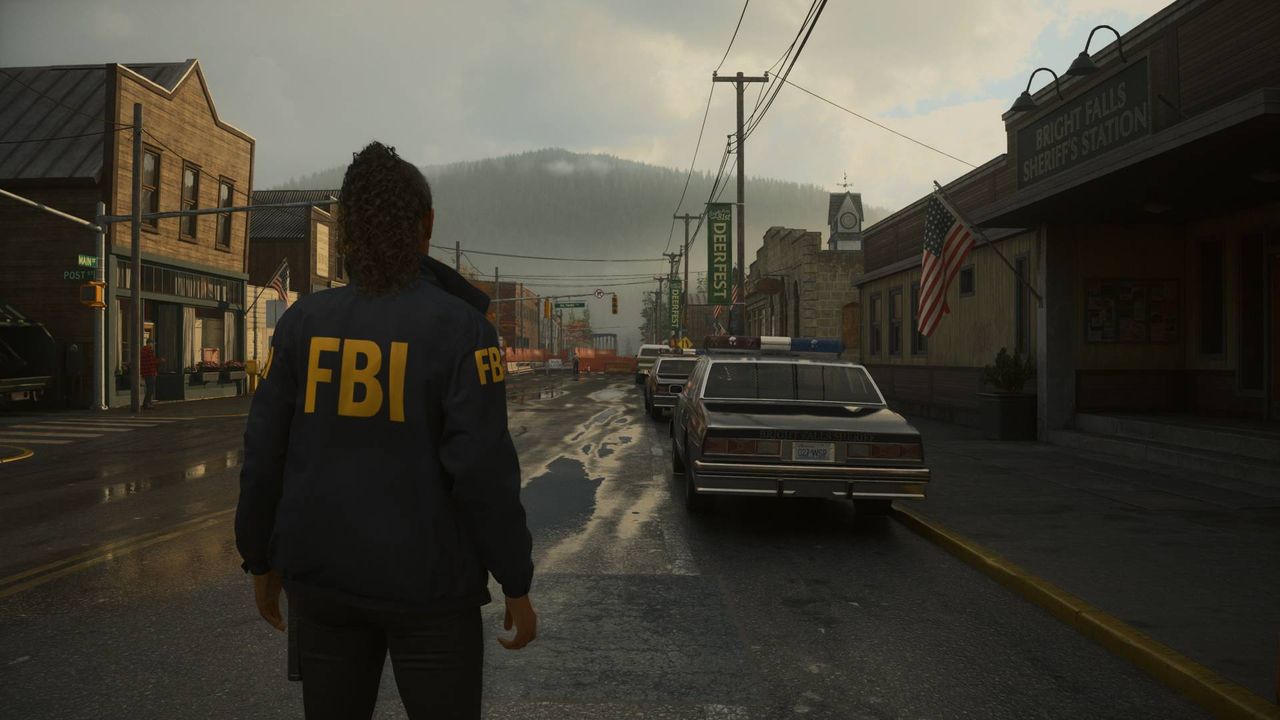
Games like Alan Wake 2 demonstrate why true path tracing remains rare; developers often opt for workarounds like Lumen to achieve global illumination instead of using "full-fat" path tracing.
Breakthrough Improvements in ReSTIR PT Enhanced
Nvidia researchers have now introduced an "enhanced" version of these techniques, known as ReSTIR PT Enhanced. This new method aims to bridge the gap between high-end hardware and playable frame rates through several key optimizations:
- Halving shift mapping costs in spatial reuse via reciprocal neighbor selection.
- Implementing new ray footprint thresholds that adapt to different scenes and materials.
- Reducing correlation artifacts using sample duplication maps.
- Unifying ReSTIR for both direct and indirect light to improve quality and cost.
- Optimizing performance and robustness by reducing color and disocclusion noise.
Benchmarks and the Future of Full Path Tracing
To test these claims, Nvidia researchers utilized an Nvidia RTX 5880. This workstation card sits somewhere between the performance levels of an RTX 4080 Super and an RTX 4090. The results were staggering, showing a total performance increase of 2.74x across all improvements.
Even when accounting for additional quality improvements like noise reduction, the new method remains 2.3x faster than the original ReSTIR. Specifically, the researchers reported a speedup ranging from 2.08x to 3.05x.
As the researchers noted in their paper abstract, this advancement brings ReSTIR PT "closer to production-ready." This breakthrough could finally move us past workarounds and into an era where full path tracing is a mainstream reality for gaming.