Google Adds Nano Banana-Powered Image Generation to Gemini’s Personal Intelligence
Google has officially expanded its AI capabilities by adding Nano Banana-powered image generation to Gemini's Personal Intelligence. This latest update transforms the tool from a generic creative assistant into a deeply personalized partner, capable of understanding user intent without exhaustive prompts. By leveraging existing data ecosystems like Gmail and Google Photos, the system can now conjure images reflecting specific personal tastes—such as a "dream home" featuring tennis courts or music studios—without those details needing to be explicitly typed. This shift marks a significant evolution where Gemini's Personal Intelligence acts as an intuitive guide rather than just a command executor.
How Nano Banana Processes Your Digital Context
The core innovation behind this update lies in how Nano Banana processes contextual signals already present within a user's digital footprint. Previously, generating an image that resonated with a user's identity required a laborious process, such as typing: "Design my dream home with tennis courts and a music studio." Now, the system accesses labeled data from Google Photos and inferred preferences from communication history to understand what constitutes "my favorite activity" or who comprises "my family." This eliminates the friction of manual description, allowing users to issue broad commands like "Design my dream home" with the confidence that the output will align with their actual aesthetic preferences.
The mechanics rely on a closed-loop feedback system where the AI references user data as its primary training ground for specific generation tasks. When a user requests an image involving family members, Nano Banana pulls from photo labels and metadata to ensure accurate representation of individuals without needing a list of names. This approach treats the Google account not merely as a storage locker but as a dynamic knowledge graph that informs creative outputs in real-time.
Google has addressed potential privacy concerns by introducing a "sources" button within the interface, allowing users to audit exactly which data points influenced the image generation. This transparency is critical for maintaining trust, as it reveals whether an AI hallucination stems from a misinterpreted email thread or a generic training set bias. Users retain full agency; they can provide feedback on erroneous inferences or manually upload reference photos via the "+" icon to override automated assumptions.
Strategic Rollout and Future Implications
While the automation of context is impressive, it introduces complexities regarding data accuracy and user expectation management. The system acknowledges that Personal Intelligence might occasionally misinterpret a user's intent based on available data, leading to generated images that miss the mark. To mitigate this, Google has built in mechanisms for correction, ensuring the AI remains a collaborative tool rather than an infallible oracle.
The rollout strategy reflects a cautious but aggressive expansion of capabilities:
- Initial Access: Restricted to Plus, Pro, and Ultra subscribers in the U.S., allowing for controlled testing with high-engagement users.
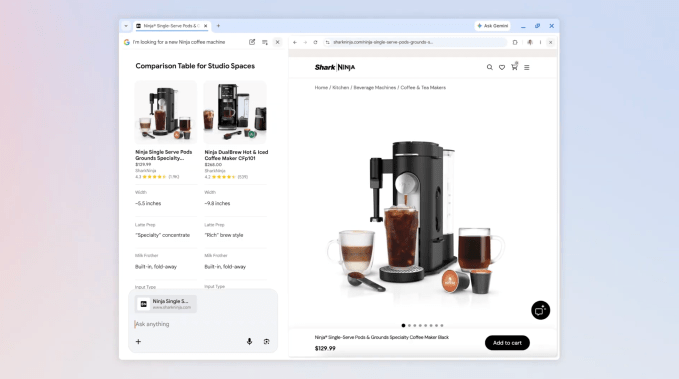
- Platform Expansion: The feature will soon expand to Chrome desktop, integrating AI image generation directly into the browsing experience.
- Global Reach: Future updates promise to extend this capability to international markets, including India and Japan, following successful localized trials earlier this year.
This phased approach allows Google to refine the model's performance on sensitive data interpretation before a global launch. The integration of Nano Banana represents a pivotal moment where generative AI moves from static prompting to dynamic understanding. As these systems evolve, the line between "asking for an image" and "requesting a personalized visualization" will blur further, redefining how users interact with creative tools.
However, this convenience comes with heightened expectations for data security and algorithmic transparency. As AI systems become more privy to personal lives through deep integration with email and photo libraries, the responsibility to protect that data becomes paramount. Google's decision to prioritize personalized context over generic generation suggests a broader industry trend: the next wave of AI utility lies in its ability to know you. The technology is ready; the challenge now is managing the relationship between human intent and machine inference with the necessary precision and trust.