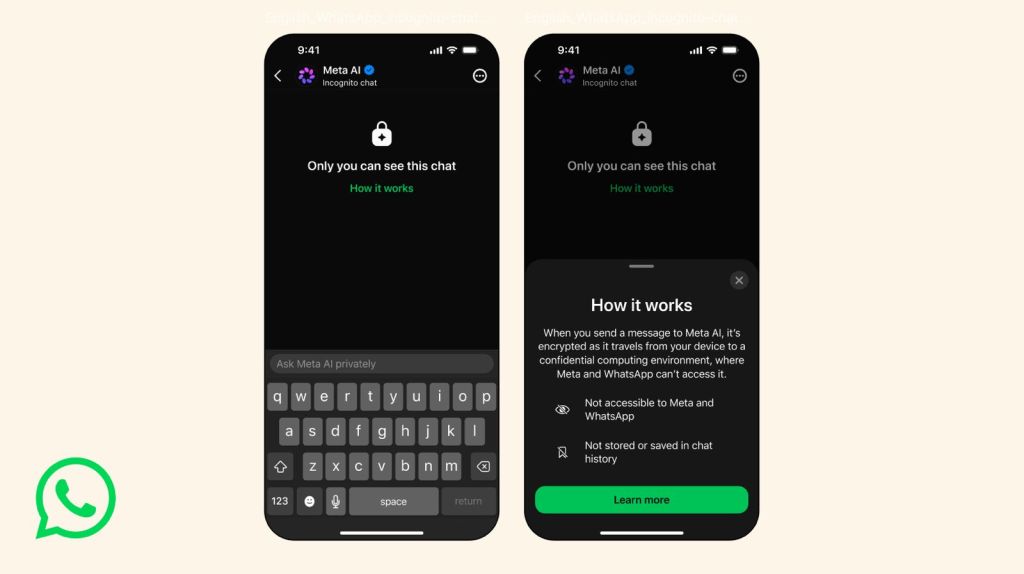
WhatsApp Incognito Mode: Balancing AI Convenience with Privacy
The paradox of modern digital communication lies in the simultaneous demand for openness and secrecy. WhatsApp adds an incognito mode in Meta AI chats to address this tension, recognizing that while users rely heavily on AI assistants for deeply personal queries, they expect those conversations to remain strictly private. This update comes as the platform historically associated with broad data collection attempts to reconcile utility with confidentiality.
Meta’s rollout addresses this friction by embedding privacy directly into the architecture of its AI interactions. This design choice reflects a broader industry shift toward end-to-end encryption for AI-driven services, a critical development given rising concerns about legal vulnerabilities tied to AI-generated responses.
How the Incognito Feature Works
The new feature ensures that incognito chats are processed within a secure environment where messages vanish automatically. This approach mirrors the functionality of private browsing windows but is tailored specifically for the nuances of conversational AI.
Key aspects of this update include:
- Self-destructing messages: Conversations disappear once the chat is closed, preventing the long-term storage of sensitive data on Meta’s servers.
- Context loss on app closure: Ending a session via app exit or phone lock erases the conversation history, significantly limiting the risk of unintended exposure if a device is accessed by others.
- Leveraging advanced models: Unlike prior features powered by smaller AI frameworks, this capability relies on Meta’s latest Muse Spark model, signaling a commitment to scalable privacy without compromising performance.
Strategic Implications for AI Adoption
Alice Newton-Rex, VP of Product at WhatsApp, emphasized the importance of such measures during a TechCrunch interview. She noted that users increasingly seek "the ability to ask questions about financial struggles, health challenges, or even tricky personal dilemmas" privately. This aligns with regulatory pressures highlighted by Reuters’ reporting on potential litigation risks tied to AI conversations, where data retention can become a legal liability.
The Side Chat extension, already in development, promises further refinement. It will enable seamless integration of Meta AI into existing chats—allowing users to seek answers without alerting other participants. This addresses a significant friction point that has historically undermined privacy expectations in group settings, where AI summaries or suggestions might inadvertently reveal private context to group members.
Competitive Landscape and Future Standards
Meanwhile, competitors like OpenAI (ChatGPT), Anthropic (Claude), and DuckDuckGo have adopted similar incognito approaches, underscoring the feature’s role in shaping the next phase of AI adoption. As these platforms vie for user trust, the ability to offer transient, private interactions becomes a key differentiator.
Critically, Meta’s move follows years of laying groundwork for secure processing infrastructure. Last year, the company detailed its approach to maintaining privacy while delivering AI-powered summaries and recommendations, a foundation now extended to direct, private interactions. While privacy-focused platforms like Proton have long prioritized such models, Meta’s entry elevates these standards into mainstream messaging ecosystems.
Bridging the Gap Between Trust and Utility
As legal frameworks evolve to address digital privacy concerns, this feature represents more than a technical upgrade. It is a strategic acknowledgment of user trust as a cornerstone of AI utility. By prioritizing secure processing and transient communication, WhatsApp aims to bridge the gap between convenience and confidentiality.
The goal is clear: ensuring users feel empowered to explore even their most vulnerable questions without reservation. In an era where digital footprints are permanent, the ability to converse with AI without leaving a trace is not just a feature—it is a necessity for widespread adoption.