True digital minimalism often fails when it ignores the inescapable requirements of modern life. For many users of "dumb phones," the goal is not to live in a technological vacuum, but to escape the dopamine-driven feedback loops of the modern smartphone. To solve this, the Brooklyn-based company behind the Light Phone is introducing new third-party ‘Tools’ to its ecosystem.
In May, the company will launch a new developer program for LightOS, the operating system powering the recently released Light Phone III. This initiative allows developers to create applications specifically designed for the device’s unique, distraction-free architecture.
Expanding the Ecosystem with New Light Phone third-party ‘Tools’
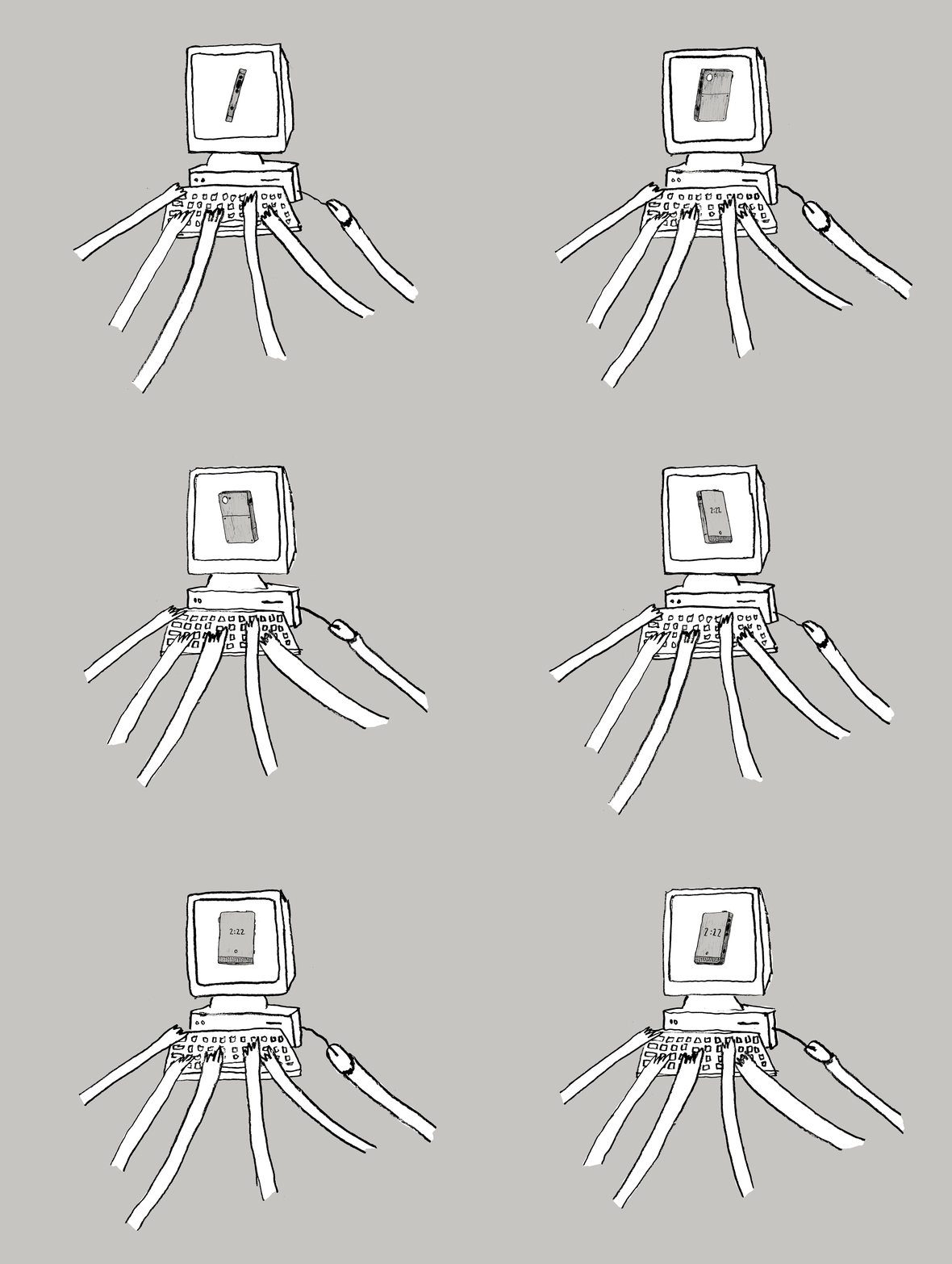
While the Light Phone has historically relied on a small set of first-party applications like calculators, alarms, and calendars, the community has long sought more specialized utility. Developers have already been unofficially modifying hardware to include features like Spotify clients or gym membership pass storage. By providing an official Software Development Kit (SDK), Light is formalizing this community-driven expansion.
The goal is not to turn the device into a secondary smartphone, but to provide highly focused, single-purpose utilities that do not trigger the "infinite scroll" impulse. Potential additions to the ecosystem could include:
- Localized transit apps for real-time bus or train tracking
- Two-factor authentication (2FA) clients for enhanced security
- Specialized utility tools such as guitar tuners, metronomes, or weather monitors
- Encrypted messaging integrations, including a planned first-party Signal tool
These tools are designed to be lightweight and intentional. While the company plans to launch an official Tool Library this fall to host vetted applications, users will still retain the ability to use developer mode for manual side-loading of unvetted software.
A Privacy-First Alternative to Mobile App Stores
The timing of this move is significant when viewed against the broader landscape of mobile operating systems. As Google moves toward stricter enforcement and identity verification for apps installed outside the Play Store, Light is positioning itself as a more open alternative.
The company’s approach prioritizes user privacy and developer freedom. They have explicitly stated that the Tool Library will contain no advertisements and will never sell user data.
However, this openness comes with strict curation. The Light Phone team has indicated they will not "bless" tools in their official library that run counter to the device's core philosophy or pose legal risks. For example, while a developer might create an email client, the company may decline to feature it in the official library if it encourages digital noise. This distinction between "official" and "possible" creates a unique middle ground for niche hardware enthusiasts.
The success of this expansion likely depends on whether Light can maintain its identity while increasing its utility. If the platform becomes too feature-rich, it risks becoming just another smartphone with a smaller screen. Yet, if they succeed in providing essential utilities without the accompanying distractions, they may have found the blueprint for the next generation of intentional technology.