The premium foldable market is increasingly defined by a frustrating paradox: rising manufacturer MSRPs paired with diminishing hardware innovation. As competition intensates between established players like Samsung and Google, Motorola's new Razr folding phones suggest a strategy built more on brand momentum than technological leaps. While the 2026 lineup includes a much-anticipated book-style foldable, the cost of entry is climbing alongside a set of specifications that feel stubbornly iterative.
Price Hikes and Hardware Stagnation in Motorola's New Razr Folding Phones
The most striking aspect of the latest announcement is the significant upward shift in pricing across the entire Razr family. The Razr Ultra now commands a premium of $1,500, representing a $200 increase over its predecessor. Similarly, the Razr+ has risen to $1,100, and the entry-level Razr has seen a $100 bump to $800.
When evaluating the hardware, the silicon remains largely stagnant for top-tier models. The Razr Ultra and Razr+ continue to rely on the Qualcomm Snapdragon 8 Elite and Snapdragon 8s Gen 3 architectures, respectively. This provides little reason for enthusiasts of last year's models to consider an upgrade.
Furthermore, the base Razr has taken a regressive step in storage capacity, dropping from 256 GB down to just 128 GB. This lack of value enhancement makes the decision to upgrade increasingly difficult for even the most loyal Motorola users.
Incremental Display and Durability Upgrades
While core processing power remains unchanged, Motorola has focused its engineering efforts on screen brightness and structural resilience. The Razrit Ultra features a new "Extreme AMOLED" display capable of hitting a staggering 5,000 nits peak brightness. This impressive figure is specifically designed to combat sunlight glare.
On the durability front, the Ultra introduces Corning Gorilla Glass Ceramic 3 on the outer display. Motorola claims this material offers significantly better drop performance than previous generations.
Battery Longevity and Aesthetic Finishes
The lineup does see some improvements in battery longevity and specialized finishes:
- The Razr Ultra features a 5,000 mAh battery, supported by 68-watt wired charging.
- The base Razr has been bumped to 4,800 mAh, though it suffers from the aforementioned storage reduction.
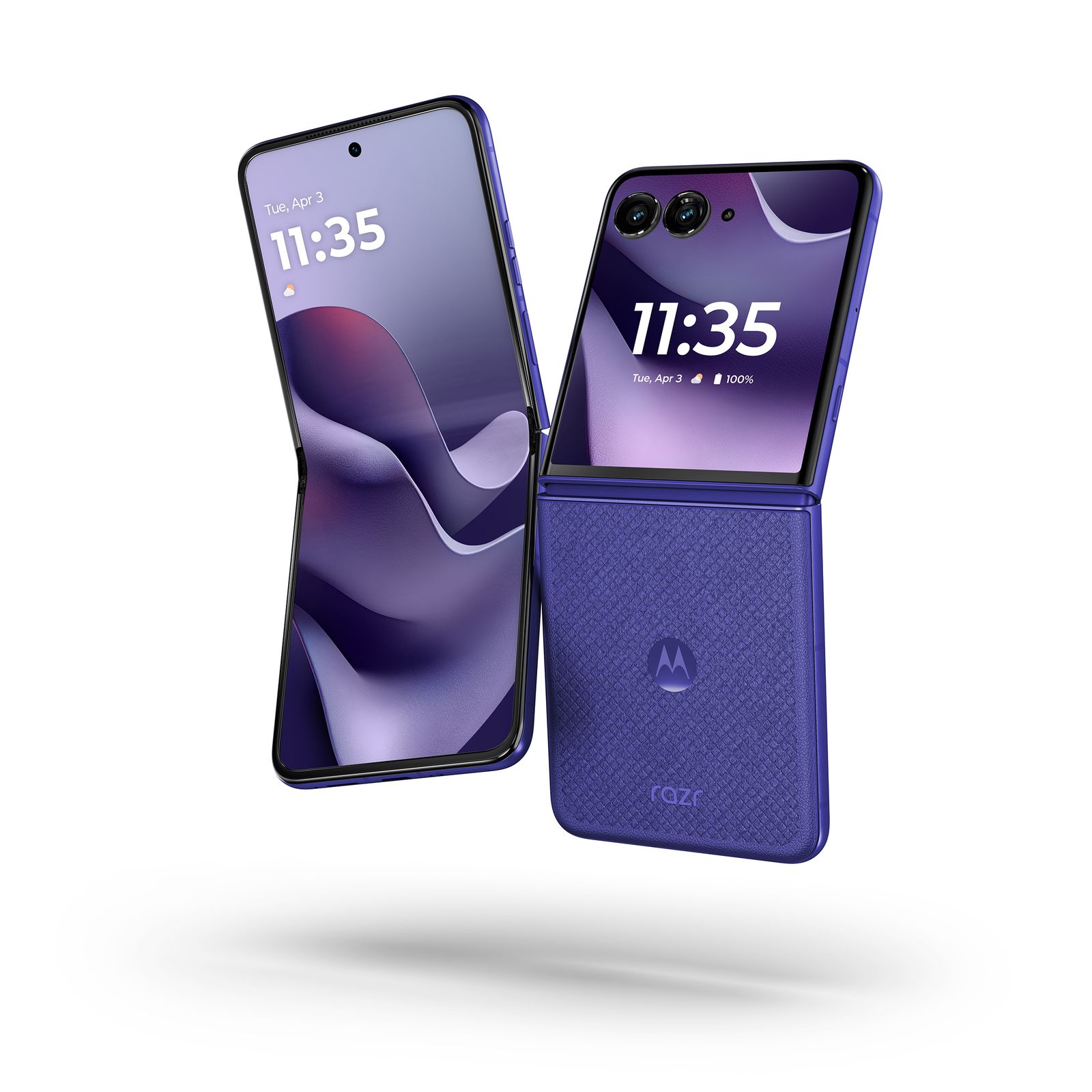
- New aesthetic options include an Alcantara texture in Orient Blue and a natural wood veneer for the Ultra.
The New Razr Fold: A Premium Entry
A new "book-style" device, the Razr Fold, joins the lineup at $1,900, featuring an 8.1-inch internal display. However, this device enters a crowded arena where it must compete against much slimmer alternatives.
At nearly 10mm thick when closed, it lacks the svelte profile of the Samsung Galaxy Z Fold7. This thickness makes its massive $1,900 price tag a difficult pill to swallow for those seeking maximum portability.
AI Integration and the Software Support Gap
Motorola is attempting to bridge the hardware gap by leaning heavily into AI integration and software ecosystems. The new lineup features a hodgepodge of assistants, including Google Gemini, Microsoft Copilot, and the proprietary Moto AI. Notable additions include "Google Photos Wardrobe," an experimental feature that allows users to virtually mix clothing items from their photo library.
Despite these modern flourishes, Motorola's commitment to long-term software support remains a significant weakness. While the company has extended security updates to five years, it only promises three Android OS upgrades.
This falls far short of the seven-year commitment offered by both Google and Samsung. This discrepancy fundamentally changes the value proposition of these devices over a multi-year ownership cycle. The 2026 Razr lineup represents a calculated attempt to capitalize on the folding trend, but for tech enthusiasts, it feels more like a costly refinement than a revolution.