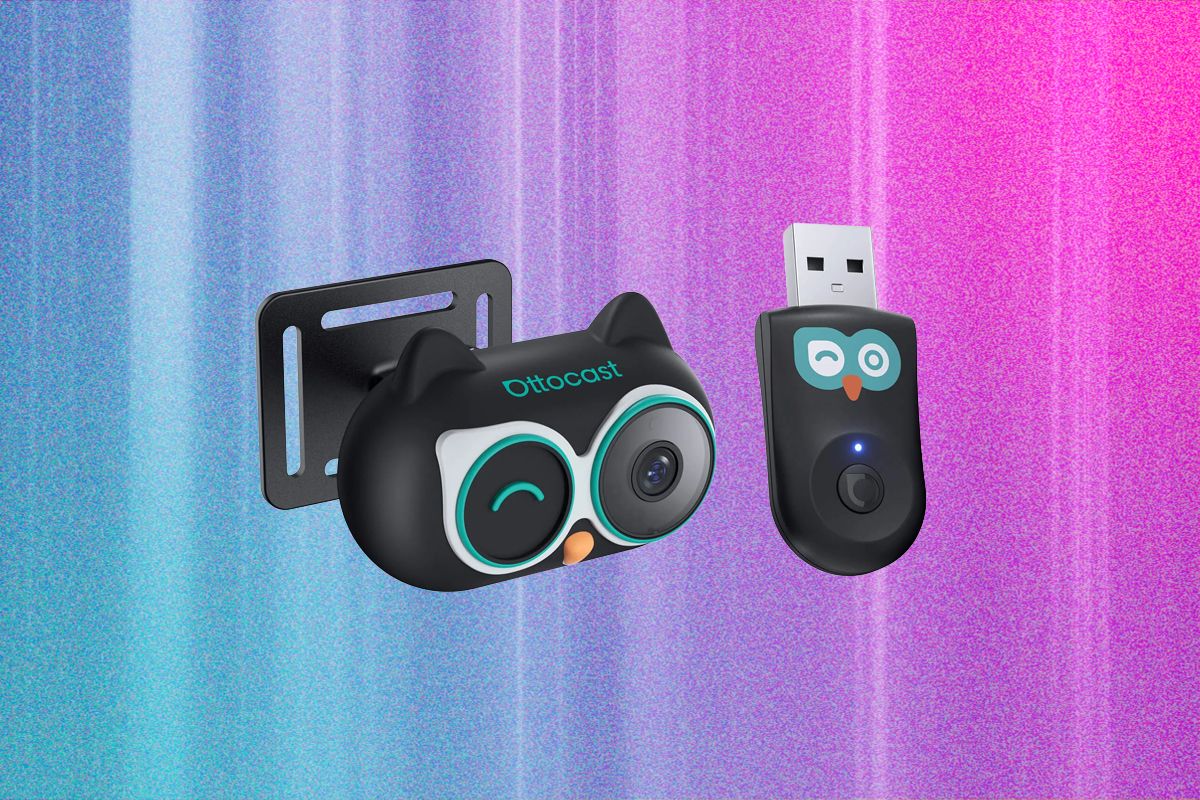
The transition from rudimentary FM radio receivers to the hyper-connected, touch-sensitive dashboards of modern vehicles has fundamentally altered how drivers interact with their surroundings. As software integration becomes deeper within automotive hardware, the focus has shifted from simple media playback to specialized utility. The Ottocast Cabin Care Wireless CarPlay Adapter represents the latest attempt to leverage this ecosystem, repurposing a standard infotainment screen into a functional surveillance tool for monitoring rear-seat passengers.
Hardware Implementation and Setup
Integrating new peripherals into an established vehicle ecosystem requires precision and specific hardware compatibility. This system functions by converting a factory-wired CarPlay connection into a wireless one, while simultaneously introducing a rear-facing camera feed to your dashboard.
To use this device, your vehicle must feature factory-wired Apple CarPlay, typically found in models from 2016 or later. It is important to note that the system is designed for the iOS ecosystem only; there is currently no native support for Android devices.
Installation and Connectivity Challenges
The installation process is notably efficient, requiring approximately ten minutes of active configuration. The adapter connects via a standard USB data port, though users should ensure they are not using a charge-audio-only port, as this will fail to trigger the necessary handshake. For mounting, the camera unit attaches to the rear headrest using metal clips or a cross strap, providing a stable view without permanent modifications.
However, certain logistical friction points remain for multi-driver households. Because the device is designed to auto-connect only to the last-used phone, any secondary driver must manually re-pair their device upon entering the vehicle. This lack of seamless multi-user support can be an inconvenience in shared vehicles or families with multiple smartphones.
Visual Performance of the Ottocast Cabin Care Wireless CarPlay Adapter
The primary utility of this setup lies in its ability to provide visual reassurance without the driver needing to physically turn around. The hardware utilizes a 150-degree wide-angle lens, offering a substantial field of view that minimizes fish-eye distortion. This perspective is critical for monitoring rear-facing car seats and ensuring safety straps are correctly positioned.
During daylight hours, the image quality remains high, providing a natural representation of the backseat environment. The system also incorporates infrared night vision to assist in low-light conditions. While the footage is not cinematic, it provides enough clarity to check on a sleeping child without needing to activate bright interior cabin lights.
The physical design offers several advantages over traditional mounting solutions:
- Elimination of cable clutter: The wireless connection prevents dangling wires from being accessible to children.
- Minimalist footprint: By using the existing headrest and dashboard, the system avoids bulky additional monitors.
- Durable construction: The hardware has demonstrated resilience against extreme temperature fluctuations, remaining functional in both freezing and high-heat environments.
Software Friction and Usability Hurdubs
Despite the impressive hardware, the software implementation presents challenges to a seamless driving experience. When using the split-screen mode—which displays the camera feed alongside CarPlay—the interface undergoes significant compression. This reduction in icon size makes precision tapping difficult when navigating complex menus or attempting to change media while in motion.
The system's "camera-only" mode introduces even deeper functional trade-offs. While this mode provides a full-screen view of rear passengers, it effectively disables many steering wheel controls, such as the ability to skip tracks or end calls. Furthermore, an interface overlay featuring the brand’s owl icon and navigation arrows frequently obstructs standard CarPlay touch buttons like "back" or "exit" in apps like Google Maps or Spotify.
Final Verdict
The Ottocast Cabin Care Wireless CarPlay Adapter is best viewed as a specialized convenience upgrade rather than a total replacement for traditional monitoring methods. It successfully addresses the core problem of passenger surveillance by utilizing existing vehicle technology, even if it does so at the cost of some UI stability.
For parents who prioritize a clean, wire-free cabin and can tolerate minor interface inconveniences, the system offers significant value. However, those who rely heavily on integrated steering wheel controls or share their vehicle with Android users may find the limitations outweigh the benefits. Ultimately, it is a promising step in the evolution of smart car peripherals.