Razer has managed to reduce the weight of its flagship wireless gaming mouse by just five grams, yet this marginal shift represents the most significant evolutionary step in the Viper lineage since the model’s inception in 2019. The Razer Viper V4 Pro does not redefine the category with a paradigm-shifting leap in technology; rather, it perfects the existing formula through microscopic adjustments in latency, battery efficiency, and structural integrity.
In a market saturated with peripherals claiming to be "pro-grade," the V4 Pro’s value lies not in novelty, but in its relentless pursuit of consistency. It is a device designed for players who demand precision, offering a refined experience that addresses the specific pain points of wireless gaming without altering the successful ergonomic foundation of the Viper line.
The Illusion of Stasis: Design and Build
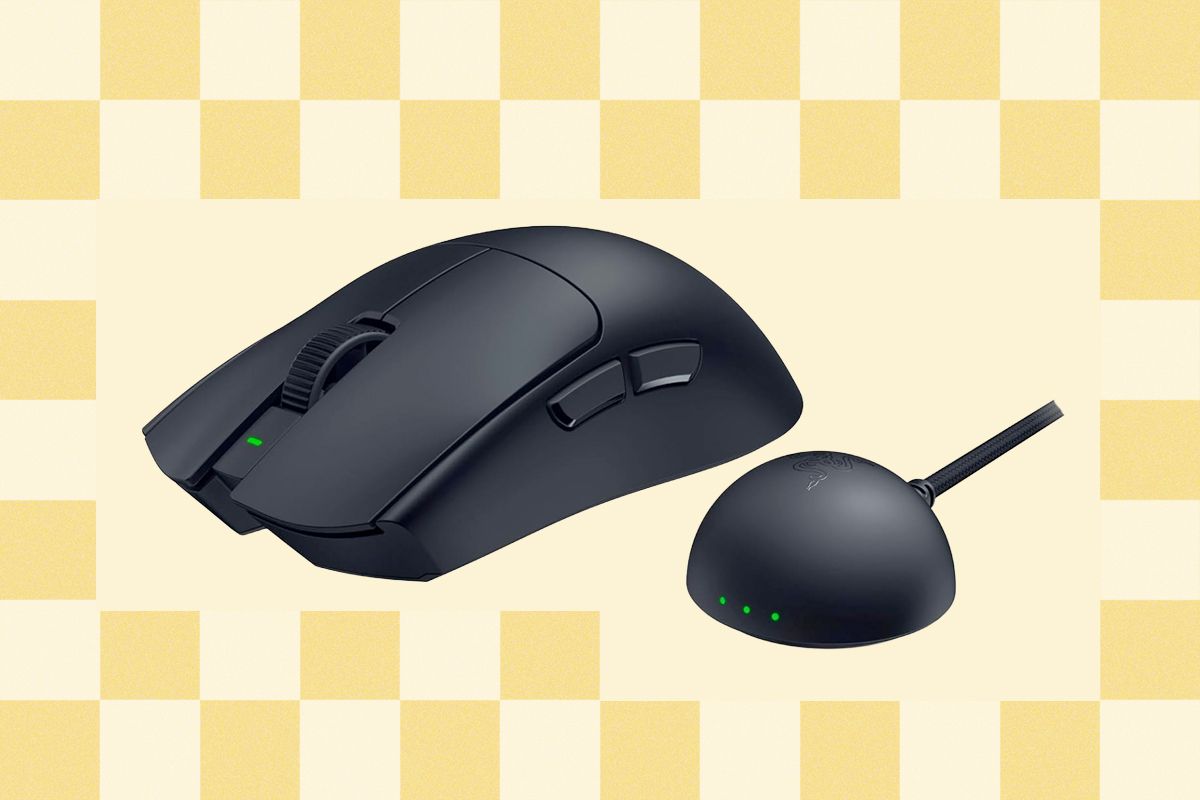
Visually, the transition from the Viper V3 to the V4 Pro is nearly imperceptible. The ambidextrous shell retains the familiar, slightly tapered profile that has served competitive gamers well for years, with the only notable exterior change being a subtle shift in the white chassis hue. Razer did not attempt to reinvent the wheel because the previous generation’s ergonomics were already optimized for the palm grip and quick flicks required in tactical shooters.
However, looking past the identical silhouette reveals a chassis engineered for rigidity despite its ultralight 50-gram frame (49 grams in black). To achieve this weight reduction, Razer sacrificed repairability. The internal components are held together by a combination of screws, plastic clips, and braces that, while effective for structural stability, are brittle and prone to snapping during disassembly.
This is a common trade-off in the ultralight segment, but it signals to users that longevity depends on careful handling rather than modular replaceability. The engineering focuses on creating a rigid unit from fragile parts, ensuring that the mouse feels solid during high-speed movements without the creaks or flex that plague cheaper lightweight designs.
Beneath the Switches: Optical Precision
The most tangible upgrade for competitive players lies in the input mechanism. Razer has replaced the traditional mechanical switches of the V3 with optical switches for both the main buttons and the scroll wheel. This shift eliminates the physical contact latency inherent in mechanical switches and prevents the double-clicking issues that have plagued the brand in previous iterations.
The tactile experience is distinct: a short travel distance with an immediate, full-bodied click that feels snappy and responsive. Key improvements include:
- Optical Main Buttons: Eliminate micro-switch wear and double-clicking issues while providing instant actuation.
- Optical Scroll Wheel: Features an upgraded encoder design providing distinct, separated bumps for precise scrolling.
- Side Buttons: Offer slightly softer, more muted tactile feedback compared to the primary inputs.
The primary inputs are calibrated for speed and accuracy. This hardware change is complemented by the introduction of Frame Sync, a technology that synchronizes the mouse’s optical sensor with the computer’s polling rate. By eliminating latency mismatches between the sensor and the host system, the V4 Pro achieves an average click latency of 0.204 milliseconds and a motion latency of 0.36 milliseconds.
Performance in the 8K Era
The V4 Pro supports up to 8,000 Hz polling, a standard the V3 also reached, but the consistency of that polling is where the V4 shines. In practice, this translates to smoother cursor movement and more precise tracking in aim trainers and tactical shooters like Counter-Strike 2 and Valorant.
The reduction in latency, while technically marginal, reduces the potential for micro-errors in high-stakes moments. For players already using the V3, the difference may be subtle, but for those coming from older generations, the responsiveness is immediately noticeable.
The wireless dongle has also been redesigned into a hemispherical "bio-dome" shape. Unlike the flat dongles of previous models, this dome sits upright on the desk, featuring three programmable RGB indicators. These lights provide real-time feedback on:
- Connection quality
- Battery level
- Polling rate and DPI stages
This visual clarity is particularly useful for competitive players who need to quickly verify their mouse’s status without opening software menus.
Battery Life and Customization
Perhaps the most practical improvement is the battery efficiency. At 8,000 Hz polling, the V4 Pro lasts up to 45 hours on a single charge, nearly tripling the 17-hour battery life of the V3 at the same setting. At 1,000 Hz, it lasts up to 180 hours, which doubles the previous generation’s capacity.
This leap in efficiency allows for longer gaming sessions without the anxiety of mid-game depletion, a critical factor for professional and semi-professional gamers who cannot afford downtime for charging.
The Razer Synapse software continues to offer granular control over the mouse’s behavior. Users can adjust sensor tracking distance, dynamic sensitivity curves, and even mouse rotation to suit their specific grip style and game title. The dynamic sensitivity feature, which allows for rapid flick shots and precise aiming adjustments, has been refined in this generation to provide a more responsive feel in tactical shooters.
While the mouse is capable of everyday productivity tasks, its primary design philosophy remains focused on competitive performance.
Verdict
The Razer Viper V4 Pro is not a radical departure from its predecessor, but a masterclass in incremental refinement. It addresses the specific pain points of wireless gaming mice—latency, battery life, and structural rigidity—without altering the successful ergonomic foundation of the Viper line.
- Weight: Reduced to 50g, enhancing agility in fast-paced games.
- Latency: Optical switches and Frame Sync reduce input lag to near-instantaneous levels.
- Battery: Significant improvement in efficiency, lasting up to 180 hours at 1 kHz.
- Durability: Ultralight design compromises repairability, requiring careful handling.
For current Viper V3 owners, the upgrade may feel optional, but for gamers using older mice or those entering the high-polling-rate segment, the V4 Pro offers a compelling, polished package.