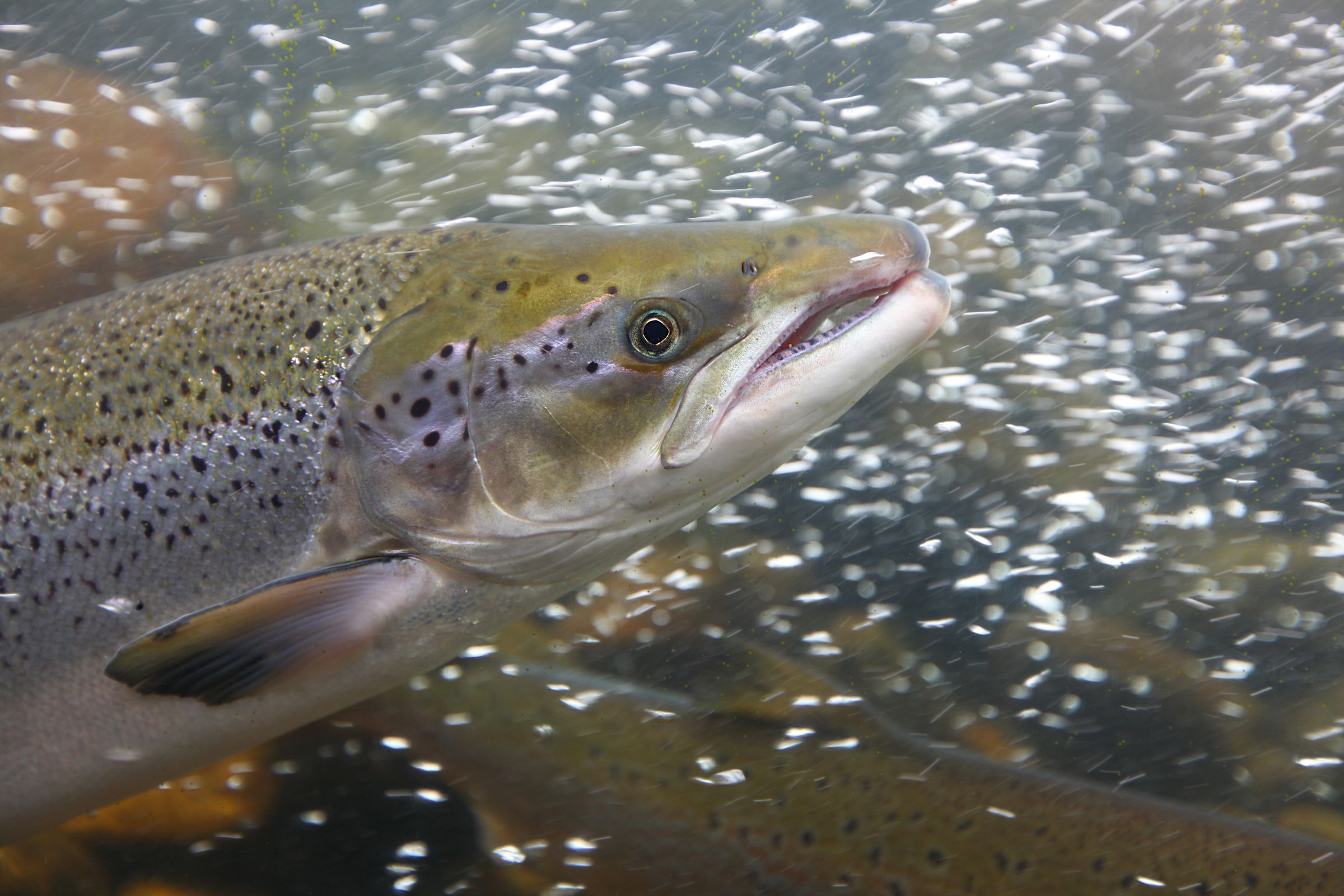
Beneath the surface of Sweden's Lake Vättern, juvenile Atlantic salmon are navigating a chemical landscape increasingly shaped by human waste. Recent findings have emerged after scientists gave cocaine to salmon to study the impact of drug contamination on aquatic life. A new study published in the journal Current Biology provides the first definitive evidence that cocaine and its metabolites are fundamentally altering fish behavior within natural, complex ecosystems.
Moving Beyond Laboratory Settings
For years, the scientific community understood that drug contamination could influence aquatic life, but these observations were largely confined to controlled laboratory settings. The limitation of lab-based research is significant; a tank cannot replicate the predators, temperature fluctuations, and current complexities of a living river or lake.
This new study breaks that barrier by observing wild populations in their natural habitats. The research was coordinated by Griffith University in collaboration with the Max Planck Institute for Animal Behavior and several other prestigious institutions. By monitoring movement patterns, the team was able to observe how drug-induced behavioral shifts translate into actual changes in spatial usage.
The Results: What Happens When Scientists Gave Cocaine to Salmon?
To conduct this high-stakes experiment, researchers surgically implanted small, slow-release devices into 105 juvenile salmon. These devices were designed to introduce specific substances into the fish's system over a two-month period. To ensure accuracy, the study divided the subjects into three distinct groups:
- Control group: Received no chemical exposure to establish baseline movement patterns.
- Cocaine group: Exposed to the primary drug to observe direct behavioral effects.
- Benzoylecgonine group: Exposed to the main metabolite of cocaine commonly found in wastewater.
The results were both startling and unexpected. While cocaine certainly influenced behavior, the most profound disruption occurred in the group exposed to benzoylecgonine. These fish exhibited extreme dispersal patterns, swimming up to 1.9 times farther than their counterparts and spreading across an area approximately 20 miles from the initial release point. This suggests that the chemical byproducts of human drug use may be even more ecologically disruptive than the original substances themselves.
The Challenge of Environmental Monitoring
The discovery that metabolites like benzoylecgonine drive these changes presents a massive challenge for environmental monitoring. Current risk assessments and water quality regulations often focus heavily on the primary compound—in this case, cocaine—frequently overlooking the secondary metabolites that are often more prevalent in wastewater treatment outflows.
If we are only monitoring the "parent" drug, we are missing the most potent drivers of ecological change. The implications of this increased dispersal are much broader than the movement of a single species. In any ecosystem, location is everything; where a fish moves dictates its access to food, its vulnerability to predators, and its ability to find mates.
Future Risks to the Food Web
When pollution forces salmon to wander further and more erratically, it destabilizes the fundamental structure of the aquatic food web. The reality is that wildlife is already navigating a cocktail of human-made chemicals.
As researchers move forward, the next phase of investigation will focus on whether these altered behaviors lead to measurable declines in survival and reproduction rates. Determining the threshold at which these behavioral shifts become irreversible population collapses is now a matter of extreme biological urgency.