SpaceX Starship V3 Launch: A Critical Step Forward Amidst Booster Loss
The history of spaceflight is measured in milliseconds, where the difference between orbital insertion and catastrophic failure is often a single valve opening too late. For over a decade, SpaceX has treated its Starship program not as a delicate scientific instrument, but as a brute-force engineering challenge. This philosophy was on full display during the launch of Starship V3 on May 22, 2026, marking a significant, albeit imperfect, milestone in the company’s relentless iteration cycle.
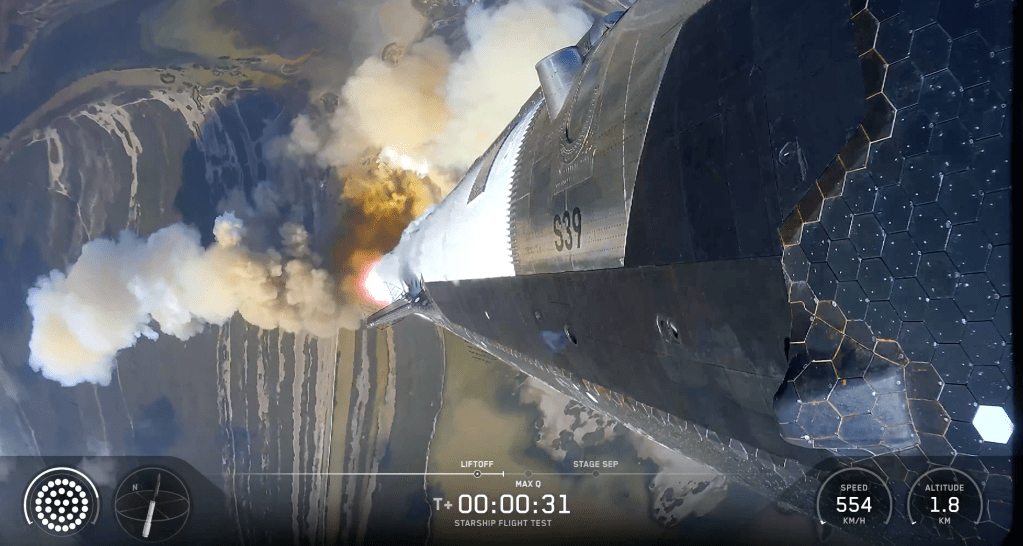
As the most powerful rocket ever constructed, the 407-foot vessel lifted off from Starbase, Texas, carrying the weight of both immediate commercial ambitions and long-term interplanetary dreams. While the upper stage successfully separated and continued its trajectory toward the Indian Ocean, the event was immediately framed by the loss of the Super Heavy booster during its return phase. This flight represented a critical pivot point for the company, coinciding with the public filing of its Initial Public Offering (IPO) and signaling a transition from private development to public-market scrutiny.
The V3 Architecture and Engine Evolution
The core objective of this test was to validate the Starship V3 hardware, which has been in development since late 2024. This iteration is not merely a cosmetic update but a fundamental overhaul of the propulsion system. The booster now utilizes SpaceX’s third-generation Raptor engines, designed with a simpler architecture that promises increased thrust and improved reliability. These engines are critical for achieving the faster takeoff profiles and the precise engine-out capabilities required for routine reusability.
The launch itself proceeded with standard nominal parameters until the critical separation phase. Just minutes after liftoff, the upper stage disengaged from the Super Heavy booster. While the ship continued its ascent, it suffered a notable anomaly: one of its six Raptor engines failed during the early ascent phase. Despite this loss, the remaining five engines maintained sufficient thrust to keep the vehicle on its intended path. This demonstrated the robustness of the engine-out design philosophy that SpaceX has championed for years, proving that the core propulsion mechanisms are maturing as planned.
Booster Loss and Return-to-Launch Challenges
The most dramatic failure occurred during the Super Heavy booster’s return attempt. The booster was expected to perform a simulated landing in the Gulf of Mexico, a test of the propulsive landing capability that is essential for the rocket’s reusability goals. However, the engines failed to properly re-ignite for the sustained burn necessary to slow the massive structure against Earth’s gravity and atmospheric drag. The resulting tumble and subsequent explosion in the water served as a stark reminder that even with third-generation hardware, the laws of physics remain unforgiving.
This failure highlights the immense engineering hurdles inherent in returning a vehicle of this scale. Key challenges include:
- Thermal Management: The booster must withstand extreme heat during re-entry without compromising structural integrity or engine performance.
- Propellant Pressurization: Ensuring that liquid oxygen and methane remain properly pressurized for engine re-ignition after prolonged exposure to the vacuum of space.
- Control System Precision: The guidance algorithms must execute complex maneuvers with millimeter accuracy to stabilize the booster for a vertical landing.
The loss of the booster, while disappointing, provides SpaceX with valuable data on the limits of the current hardware configuration. It underscores that even with simplified engine designs, the dynamic environment of ascent and re-entry remains a complex variable to solve.
Strategic Implications Amidst the IPO
This flight occurred at a historical inflection point for SpaceX. The company recently made its IPO filing public, with expectations of listing on the Nasdaq in mid-June. The anticipated raise of $75 billion is earmarked for further Starship development, massive AI initiatives, and debt reduction associated with xAI and X. This financial context shifts the narrative from pure engineering triumph to financial viability. Investors will be watching not just for successful launches, but for the cost-saving metrics that reusability promises.
The immediate future for Starship involves delivering advanced Starlink satellites to Earth orbit. As the only profitable arm of SpaceX’s business, Starlink requires a high-frequency launch cadence to maintain its global coverage and competitive edge. Any delays in achieving reliable booster recovery could impact the timeline for satellite deployment, potentially affecting revenue streams. However, the successful ascent of the upper stage suggests that the core propulsion and separation mechanisms are progressing despite the booster loss.
Verdict: Imperfect Progress in a High-Stakes Era
The Starship V3 launch was not a perfect success, but it was a necessary one. The loss of the booster is a setback, but the successful separation and continued ascent of the upper stage validate key aspects of the V3 design. As SpaceX prepares for its public listing, the market will likely view this flight not as a failure, but as a critical step in the long road to Mars. The company’s ability to absorb these losses while maintaining launch frequency will determine its long-term dominance in the commercial space sector. The rockets may explode, but the data they provide is invaluable.