How Tesla’s New ‘Streaks’ Feature Is Reshaping Full Self-Driving Adoption
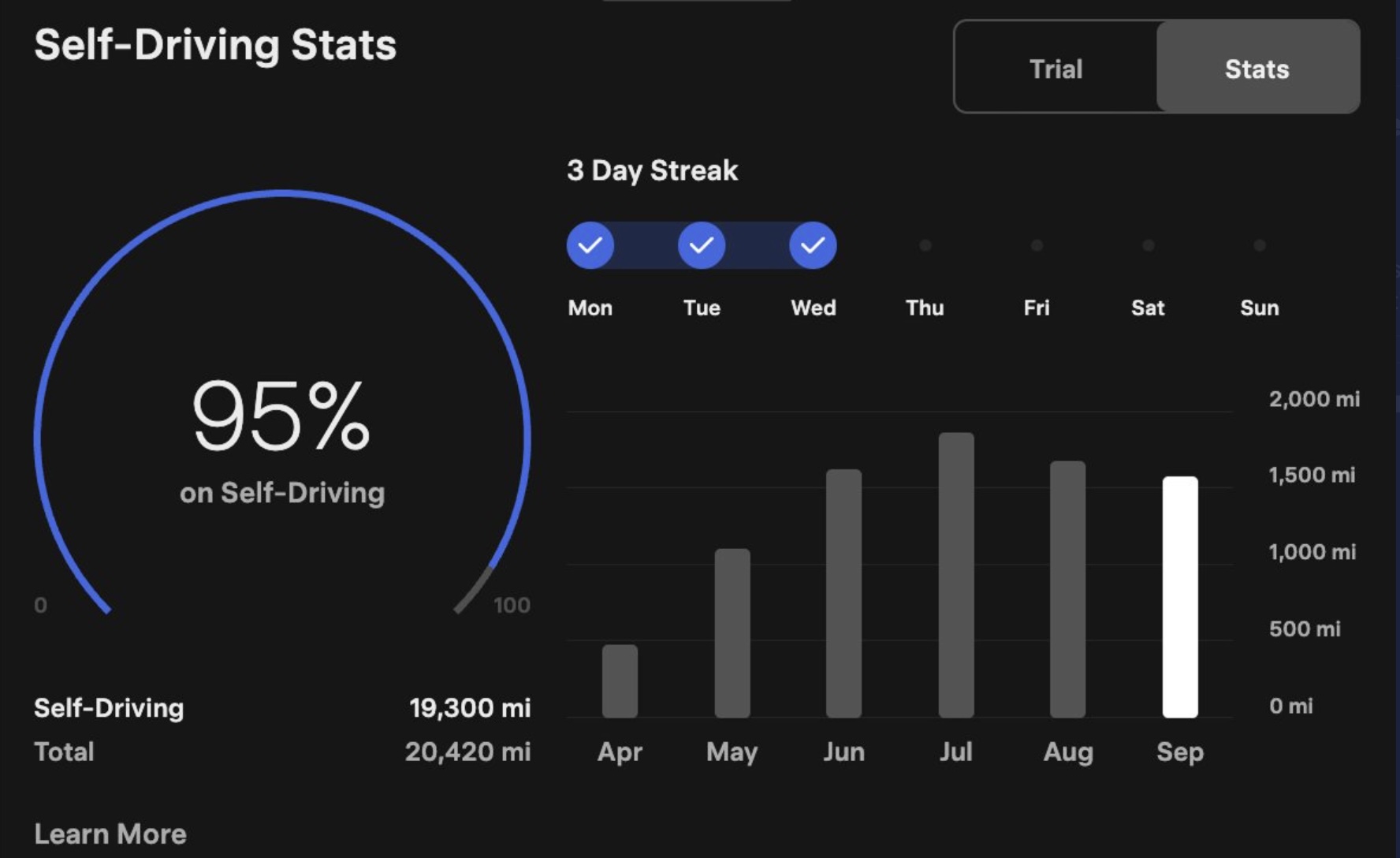
Tesla has officially added streaks and other detailed statistics to its application, allowing users to track exactly how often they use the controversial Full Self-Driving (FSD) software. This update transforms the driving experience from a passive feature into a tracked, consistent habit through a revamped dashboard designed for gamification. By highlighting usage graphs alongside consecutive activation days, Tesla aims to bridge the gap between drivers who treat automation as a novelty and those viewing it as an essential evolution of transportation. The company believes that making these metrics prominent will encourage daily engagement with technology that remains strictly supervised by a human behind the wheel.
Gamifying the Supervised Driving Experience
The redesign directly addresses a long-standing friction point for Tesla owners: the opacity surrounding FSD utility. While early adopters previously had access to basic mileage counters comparing total distance against assisted miles, the new interface offers a much deeper dive into behavioral patterns. The application now renders FSD usage in intuitive bar charts and highlights consecutive days of activation, creating a visual "streak" that rewards consistent reliance on the system.
This shift signals a strategic pivot for Tesla CEO Elon Musk, who has long positioned the company as an AI robotics powerhouse rather than a traditional automaker. Driving FSD adoption is not merely about selling software; it is about gathering the massive amounts of real-world data required to train the neural networks underpinning the robotaxi vision. By making usage statistics prominent and rewarding consistency through streaks, Tesla hopes to convert casual subscribers into daily users, thereby accelerating the learning loop essential for achieving true autonomy.
The interface update also tightens the subscription funnel significantly. Previously, enabling FSD required navigating through multiple menus on either the vehicle's touchscreen or a mobile application. The new app allows owners with compatible hardware to subscribe with a single tap, removing friction at a critical moment of decision-making. However, this streamlined experience is gated behind specific hardware requirements, limiting the rollout to vehicles equipped with the A14 chip, also known as FSD Hardware 4.0, which began shipping in early 2023.
The High Stakes Behind the New Metrics
The push for higher engagement comes at a time when Tesla faces intense scrutiny regarding its self-driving claims. Despite the "Full Self-Driving" moniker and a $99 monthly subscription fee, the system remains classified as Level 2 technology, requiring active driver supervision. Regulatory bodies in countries like Australia, Canada, China, and the United States continue to approve its use only under strict conditions, with recent approvals from Dutch regulators suggesting a global regulatory thaw that Tesla is eager to capitalize on.
Musk's ambitious targets add another layer of pressure to these metrics. His compensation package is contingent on hitting 10 million active FSD subscriptions by 2035, a goal that demands more than just initial sales; it requires sustained retention and utility. The new app serves as both a tool for users to monitor their own progress and a data dashboard for the company to optimize its product roadmap.
Key features driving this behavioral change include:
- Consecutive Day Streaks: A visual counter that tracks how many days in a row FSD was activated, adding a psychological incentive to maintain daily usage.
- Usage Bar Charts: Graphical representations showing the percentage of trips driven with assistance compared to manual driving, providing immediate feedback on utility.
- One-Tap Subscription: A streamlined entry point for eligible owners to activate or renew their FSD capabilities without navigating complex menus.
Data as the Fuel for Future Autonomy
The introduction of these statistics reflects a broader industry trend where software updates increasingly dictate vehicle value and driver behavior. Tesla is not just selling a car; it is curating an ecosystem where data collection is paramount. Every mile driven with FSD active, every braking maneuver avoided by the system, and every streak achieved contributes to the massive dataset required to solve the unsolved problems of autonomous navigation.
The reliance on FSD Hardware 4.0 also highlights the hardware-software divide that defines modern EVs. Owners of older vehicles may find themselves unable to access these new features, creating a two-tiered experience that could influence upgrade cycles. As the technology matures and regulatory environments evolve, the ability to prove consistent safety through data—rather than just marketing claims—will likely become the primary metric for public trust.
The question remains whether gamification can successfully alter driver psychology enough to justify the leap toward full autonomy. If the streaks and charts drive a measurable increase in daily FSD usage, Tesla will have secured a critical step toward its robotaxi ambitions. Without it, the 10 million subscription goal may remain a distant target, regardless of how advanced the underlying AI becomes. The road ahead is paved with data, but whether drivers are willing to travel that route daily remains an open variable in Musk's long-term equation.