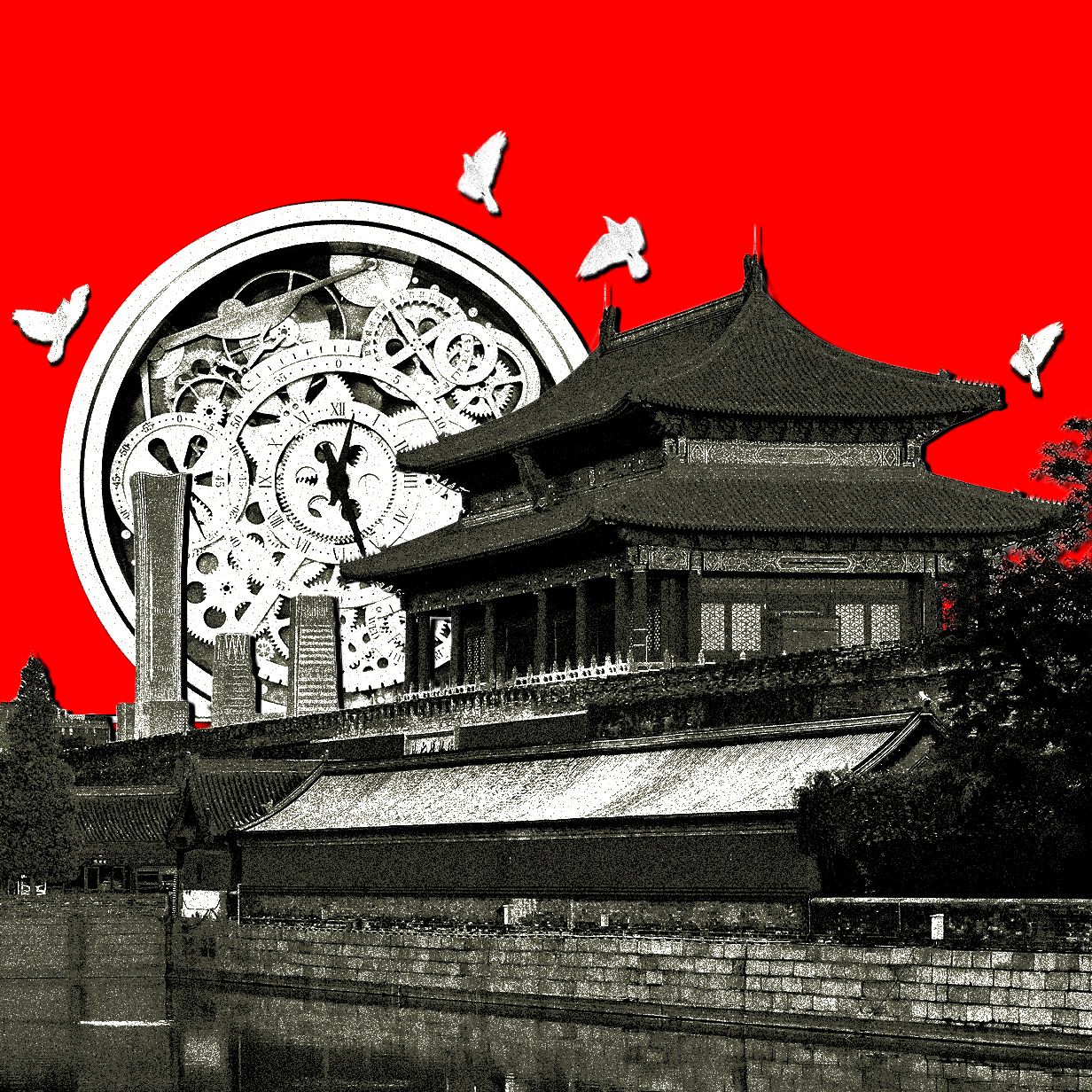
The online fiction boom reimagining China’s history is far more than a niche science fiction subgenre. Out of 2,100 of China’s most popular web novel titles, at least 238 focus on a singular, transformative premise: traveling back in time to rewrite the nation's historical trajectory using modern knowledge. This massive, highly profitable industry uses digital serials to perform a collective "what if" on the Chinese past.
These stories often span millions of characters and serve as much more than escapist entertainment. They act as a laboratory for testing modern ideologies against ancient landscapes.
Engineering the Past with Modernity
The genre thrives on the concept of technological and ideological retrofitting. Authors frequently depict protagonists who arrive in historical eras—most notably the Ming dynasty, which appears in roughly a quarter of these titles. These characters arrive equipped with blueprints for steam engines, advanced economic theories, or even parliamentary structures.
The narrative goal is rarely to explore the unknown. Instead, authors aim to rectify perceived historical failures and prevent the "humiliations" that defined China's later centuries. Key elements frequently found within these narratives include:
- The deployment of industrial revolution technologies centuries before their actual emergence.
- The hypothetical implementation of democratic or parliamentary systems to stabilize ancient regimes.
- The reimagining of revolutionary timelines to accelerate the rise of socialist structures.
- The use of modern economic reforms to safeguard dynasties from foreign or internal collapse.
The Scale of the Online Fiction Boom Reimagining China’s History
The sheer scale of these works is staggering. An average alt-history novel in this genre can reach a word count of 2.88 million characters, a length comparable to the entire Harry Potter series in Chinese. This massive volume of content ensures constant engagement for a dedicated readership.
Published in daily installments, these novels provide readers with a regular "dopamine hit." This creates a highly engaged fan base willing to pay daily fees to unlock the next chapter of a reimagined history. As part of this online fiction boom reimagining China's history, the consumption model is built on continuous, incremental updates.
Narrative Nationalism and the Limits of Subversion
While these narratives may appear subversive, a closer analysis suggests they often function as an extension of state-sanized history. In his research, Professor Rongbin Han identifies a pattern where these "alt-history" tales echo the current political rhetoric of the Chinese Communist Party (CCP). Rather than challenging existing power structures, many stories focus on optimizing them.
A prime example is the novel Red Dawn, which depicts a protagonist traveling back to 1905 to initiate a communist revolution ahead of schedule. Instead of introducing a system that contradicts modern governance, the story features the character passing power peacefully to figures resembling Mao Zedong and Zhou Enlai. This creates a narrative loop where current political reality is presented as an inevitable outcome.
The influence of censorship also shapes the genre's boundaries. Writers must navigate a landscape where discussing certain political ideologies is deemed sensitive, occasionally leading to works being removed from major platforms. This has inspired a running joke among creators that state censorship acts as a literal "Time and Space Administration," restricting travelers from accessing the first thirty years of the People's Republic of China.
A Distinctive Brand of Digital Populism
Comparing this phenomenon to Western political movements reveals a fundamental divergence in intent. While populist movements like MAGA in the United States often look toward the past to escape the perceived failures of globalization, the "Make China Great Again" (MCGA) fiction operates from a position of contemporary confidence.
The distinction lies in the motivation for looking backward. Western populism frequently seeks to reclaim a lost era of stability and tradition. In contrast, Chinese alt-history writers are not attempting to return to an ancient way of life; they believe China is already great in the modern era.
Their goal is to take the lessons of current success—in trade, science, and politics—and transplant them into the past. By doing so, they ensure that China's rise was even more efficient and unassailable. As digital publishing continues to integrate with national identity, the line between popular fiction and political reinforcement will likely continue to blur.