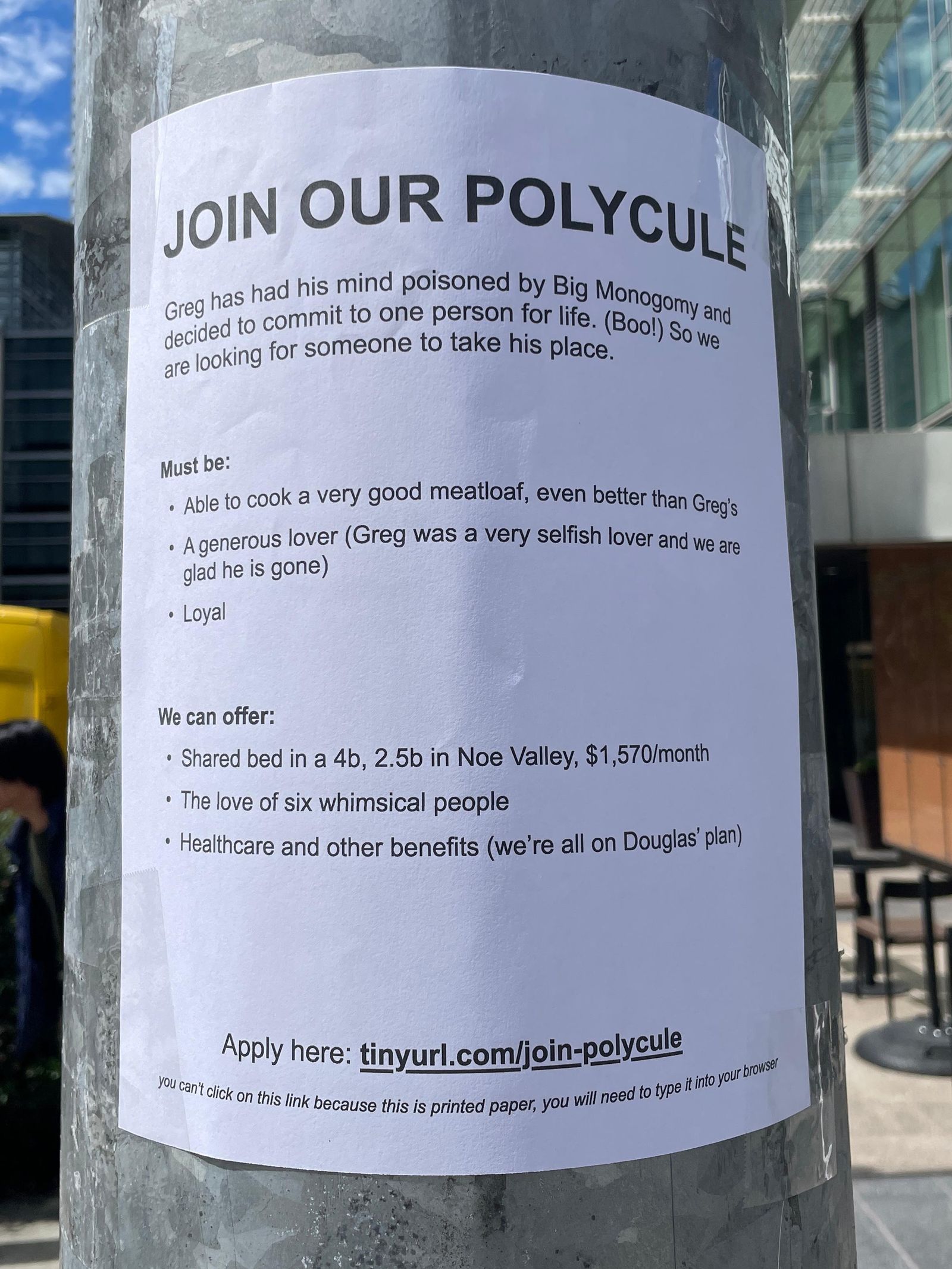
A flyer found on a San Francisco pole recently sent social media into a frenzy, appearing to be an invitation to join an exclusive polycule. However, the creator has since clarified that these polycule ads were nothing more than pure satire.
The Viral Impact of the Polycule Ads
The campaign utilized Notion forms to collect applications, featuring bizarre and unsettling fields such as waistline measurements and interest in “breeding pools.” This absurdity was paired with a specific disclaimer: a link labeled, “Please do not think of this as an application.”
Despite the clear signs of a joke, the polycule ads successfully triggered a massive wave of engagement. The project generated over 2,000 responses that flooded platforms like X and Reddit, leaving many users unsure if the "polycule" was real or a prank.
Collaborative World-Building via Satire
For the artist behind the movement, Egan, the effort was intended as a form of “collaborative world-building.” She views the project much like an alternate reality game (ARG), where strangers are invited to add fictional characters to her expanding creation.
This isn't the first time Egan has used digital mischief to capture public attention. She has previously executed similar stunts, such as Mehran’s Steakhouse and Pursuit scavenger hunts, all designed to spark delight without spreading actual misinformation. Her primary goal was never to trick people into believing a real polycule existed, but rather to invite them into a shared, absurd narrative.
Key Elements of the Project
The success of these polycule ads relied on several specific layers of irony:
- Tactile Absurdity: The physical flyer used a tangible medium to grab attention in a digital-first world.
- Tech Stereotypes: Using Notion’s tech-forward forms leaned heavily into the "SF tech bro" aesthetic.
- Satirical Framing: Presenting the project as satire helped mitigate potential backlash while encouraging high engagement.
Egan notes that tone is the deciding factor in how the public reacts; when a project is labeled a joke, responses are playful, but when seen as outrageous, they become furious. Ultimately, the project remains a fascinating test of public imagination rather than a scheme to recruit cohabiting lovers.
As Egan describes it, the work is “always just a funny thing you’re showing someone and asking them to play along with your little world.”