TSMC's Latest Bank Report Confirms Mo' Wafers Mean Mo' Money
The explosive growth of AI has reshaped the semiconductor landscape, and TSMC's latest bank report is exactly as you'd expect it to be: a testament to the industry's insatiable hunger for silicon. While this boom hasn't been kind to consumers facing soaring memory costs, it has kept chip manufacturers busier than ever. The results are staggering, with TSMC revealing profits that not only blow past original projections but also shatter earlier records.
In a stunning display of market dominance, the company reported $35.90 billion in net revenue between January and March 2024. This figure exceeds their initial guidance range of $34.6 to $35.8 billion, marking a significant milestone for the world's leading foundry.
Record-Breaking Revenue and Double-Digit Growth Trajectory
The financials tell a clear story of unprecedented demand. The reported revenue represents a 40% increase year-on-year, extending an impressive streak that now includes eight consecutive quarters of double-digit growth. Consequently, TSMC has aggressively adjusted its Q2 projection upward to between $39.0 and $40.2 billion. This revision is a massive step up from the $30.07 billion made during the second quarter of 2025, underscoring the sheer scale of current operations.
This financial surge aligns perfectly with operational metrics, specifically a 28% year-on-year growth in wafer shipments. As detailed in Jacob's RAMpocalypse explainer, we are deep in a chip shortage driven by the AI industry's seemingly bottomless appetite for system memory. It is not just RAM that is affected; SSD prices have also become absurdly high due to these supply constraints.
During a recent earnings call, Chief Executive C.C. Wei described the AI-related demand as "extremely robust." The data supports this characterization:
- 3-nanometre wafers, increasingly vital for AI chips ahead of Nvidia's imminent Rubin generation, accounted for 25% of total wafer revenue.
- Despite the shift to advanced nodes, older processes remain lucrative, with 5 nm wafers alone contributing 36% of total wafer revenue.
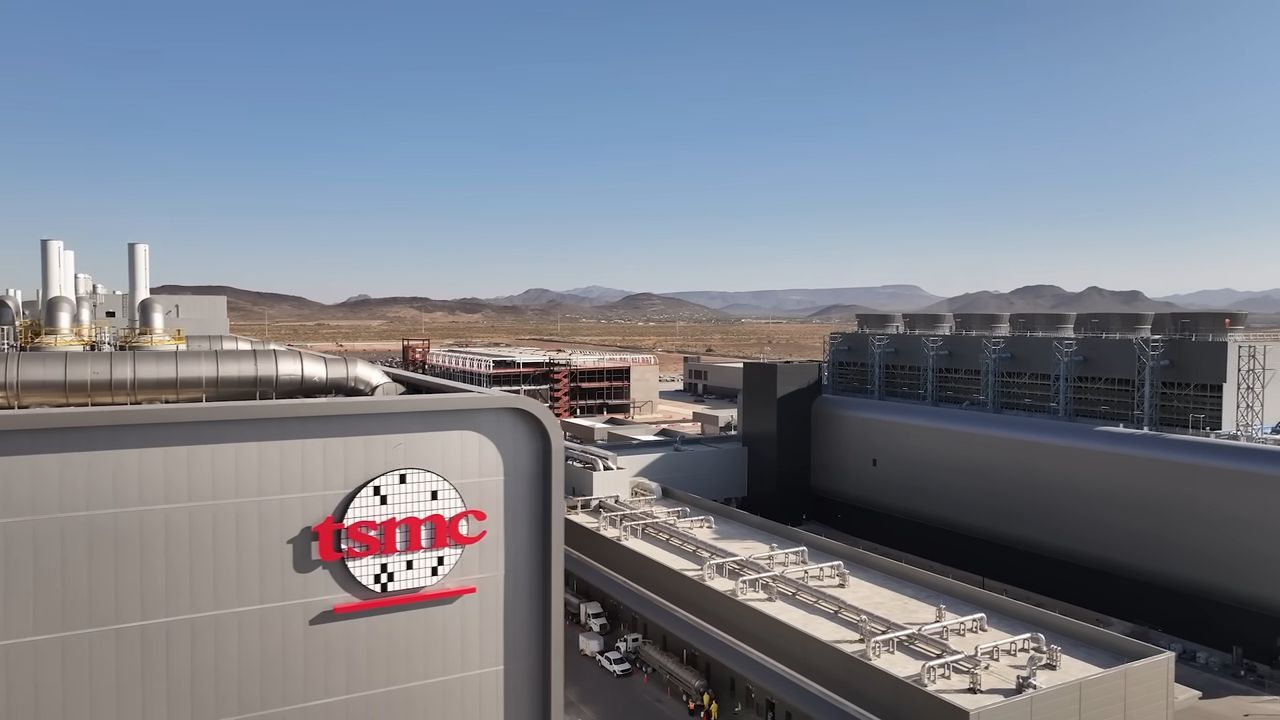
While not all revenue stems from fabricating silicon specifically for AI chips, the trajectory is undeniable. This demand justifies TSMC's massive capital expenditure, including a staggering $165 billion investment in a 'gigafab' cluster in Phoenix, Arizona. The US-based chip fab project is already configured to produce four-nanometre wafers, with full-scale 3 nm production scheduled to commence next year.
Supply Crunch: Why the Crisis Won't End Soon
The phrase "extremely robust" almost feels like an understatement given the current booking status of TSMC's facilities. Reports indicate that the foundry is booked up until 2028, leaving little room for new entrants or immediate relief in supply chains. Even the capacity of next-generation Arizona fabs has been fully booked before construction has even finished, signaling a tight market that will persist well into the future.
In other words, do not expect the supply crisis to ease any time soon. By extension, consumer pricing for high-end electronics and memory components is unlikely to drop significantly in the near term. As TSMC continues to pivot toward advanced node manufacturing to meet AI needs, the "mo' wafers" strategy has successfully translated into "mo' money," but at a cost that consumers will continue to feel.