Wayve’s self-driving tech is headed to US cars made by Stellantis
The automotive landscape is undergoing a significant transformation as Wayve’s self-driving tech prepares to integrate with vehicles from Stellantis. This strategic partnership marks more than just a new supplier relationship; it represents a fundamental shift in how legacy automakers approach advanced mobility solutions. By embedding Wayve’s end-to-end AI driving intelligence into its STLA AutoDrive platform, Stellantis is moving beyond simple component sourcing to adopt a holistic neural network architecture.
This move signals a decisive pivot away from brittle, sensor-specific systems toward generalizable, mapless AI. Designed for scalable deployment across diverse vehicle bodies and geographic terrains, this technology promises to adapt to systemic variations in real-time, setting a new standard for autonomous driving reliability.
Adapting Autonomy for Automotive Scale
The core appeal of Wayve’s technology lies in its unprecedented adaptability. Traditional autonomous systems often struggle with rigid integration requirements, relying heavily on specific sensor suites or pristine HD maps—costly bottlenecks for high-volume manufacturers. In contrast, Wayve’s approach utilizes an end-to-end neural network that functions effectively regardless of the specific sensors present.
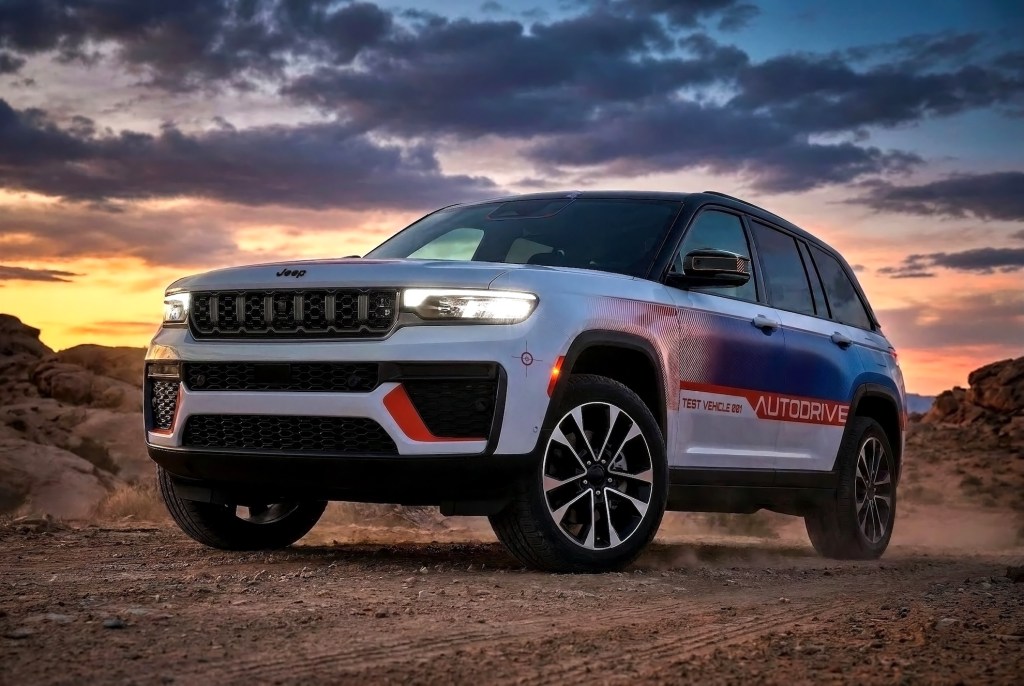
This inherent flexibility allows the technology to be layered onto Stellantis’ vast and varied product line, ranging from iconic Jeep SUVs to potential lower-cost future models. The collaboration initially focuses on a Level 2++ supervised driving system, enabling hands-free operation in both urban and highway contexts. This staged rollout is critical, as it manages risk while proving capability within the existing regulatory framework governing advanced driver assistance systems (ADAS).
Key advantages of this AI architecture include:
- Hardware Agnostic Operation: The software can run on compute stacks that OEMs already possess, bypassing massive upfront hardware redesigns for every model year refresh.
- Generalization Capacity: The system is explicitly designed to generalize across differing vehicle shapes, sizes, and operational geographies—a necessity for supporting a portfolio as diverse as Stellantis’.
- Rapid Prototyping Cycles: Evidence suggests the capability for swift integration, with prototypes running within weeks of initial talks, significantly accelerating validation timeframes.
The Strategic Value of an AI Foundation Model
Stellantis’ brand collection—encompassing Abarth, Dodge, Jeep, and several others—presents a unique engineering challenge that most single-brand players cannot replicate. For Wayve, this diversity is not a hurdle but the core commercial opportunity. Their AI model acts as an abstraction layer, promising a consistent driving experience while accommodating structural variances across fifteen distinct brand identities under the Stellantis umbrella.
This strategic alignment suggests a mutual commitment to mitigating the traditional automotive industry's reluctance toward radical technological change. Automakers are simultaneously burdened with massive legacy infrastructure and immense pressure for rapid electrification and digitalization. Partnering with a pure-play AI developer like Wayve allows them to address both fronts without committing to an entire, unproven software stack replacement overnight.
Future Trajectories Beyond Assisted Driving
While the 2028 target focuses on supervised automation, the partnership inherently points toward the eventual goal of Level 4 autonomy. The initial implementation using STLA AutoDrive serves as a proving ground for data collection and operational refinement. The system's architecture is positioned to evolve towards fully driverless operation, whether that manifests in dedicated robotaxi fleets or advanced passenger vehicle deployments down the line.
The financial backing underpinning Wayve—including major investors like Nissan, Microsoft, and Nvidia—lends credence to their long-term vision. For Stellantis, this partnership is less about buying a single feature set and more about acquiring a future-proof software operating system for its entire vehicle lineup. This system can be updated and refined iteratively over years of real-world data ingestion.
Ultimately, the deployment timeline suggests measured confidence. The industry has seen numerous high-profile announcements followed by lengthy delays; this partnership emphasizes capability at scale within a defined commercial contract structure. If Wayve delivers on its promise of generalizing performance across Stellantis’ entire operational footprint by 2028, it will serve as a potent proof point for the next generation of mobility partnerships worldwide.