You Can Soon Buy a $4,370 Humanoid Robot on AliExpress
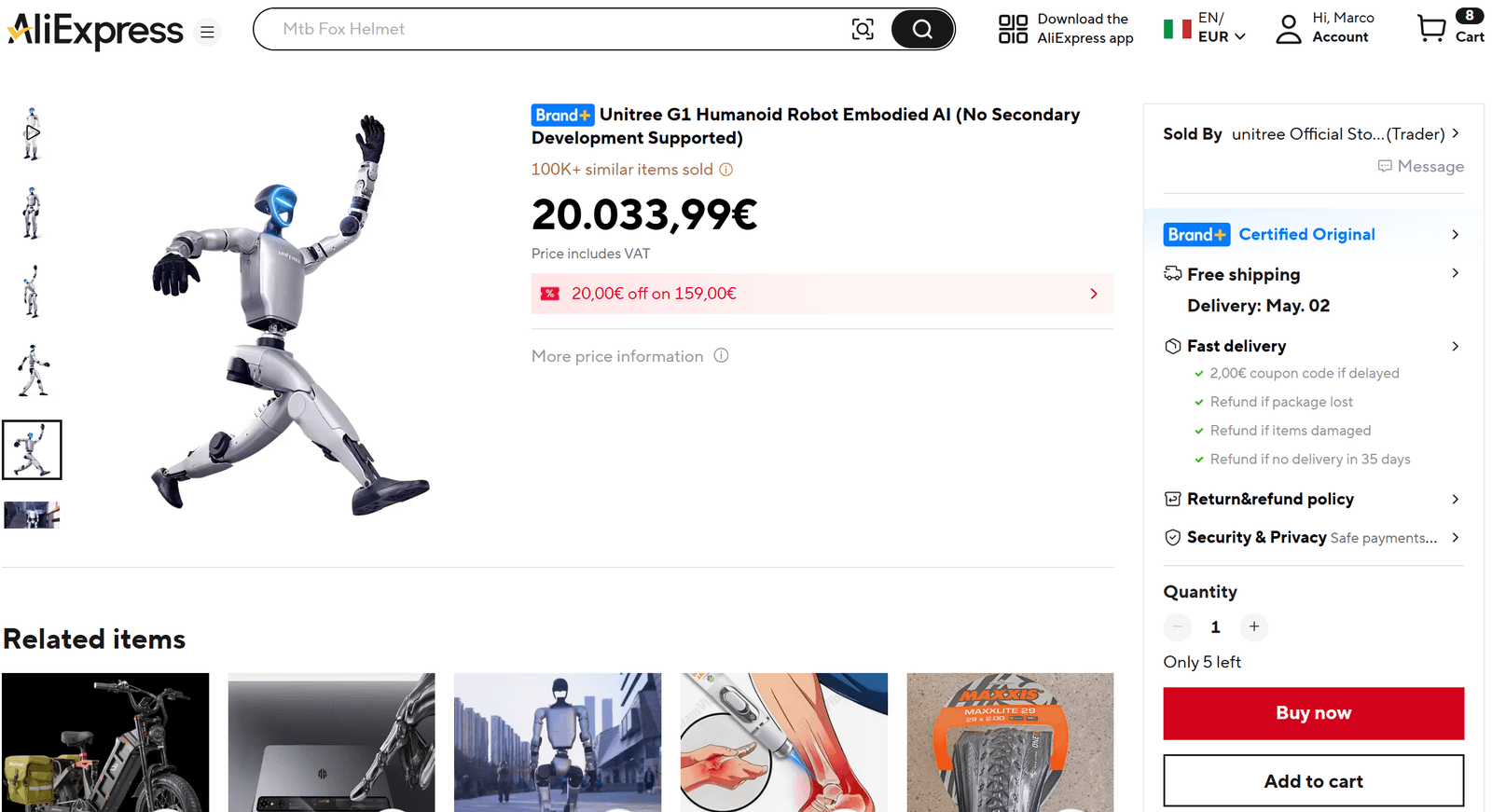
The robotics industry has reached a tipping point where You Can Soon Buy a $4,370 humanoid robot on AliExpress, marking the moment these machines shed their experimental status to become accessible commodities. For years, advanced bipedal machines were assumed to remain locked behind laboratory walls or require enterprise budgets approaching six figures. That barrier has been shattered by Unitree Robotics with the R1, a model now listed for purchase on Alibaba's global marketplace. This listing signals a decisive shift from technological promise to concrete availability for researchers and enthusiasts worldwide.
The Democratization of Bipedal Engineering
The strategic placement of the Unitree R1 represents more than a mere product launch; it is a calculated move to normalize advanced robotics through ubiquitous e-commerce channels. Just as consumers can now order automobiles directly from major retailers like Amazon, the barriers to acquiring sophisticated humanoid robots are dissolving into the familiar interface of an online shopping cart. This transition targets North America, Japan, Singapore, and Europe initially, though the lack of a fixed on-sale date suggests a rolling deployment designed to manage global logistics and import complexities.
While the R1 costs significantly less than Unitree's own H1 flagship or competitors from Figure AI and Apptronik, its physical capabilities immediately distinguish it as a specialized tool rather than a generic household assistant. Standing four feet tall and weighing 50 pounds, the robot houses 26 smart joints capable of complex movements that defy its relatively modest price point. This aggressive pricing strategy positions the R1 as a "hatchback" in a market dominated by luxury sedans, effectively lowering the threshold for entry into this field.
A Canvas for Motion, Not Domestic Labor
The true identity of the R1 lies in its physical performance rather than utility in the home. Unlike humanoid robots designed to manipulate delicate objects or prepare meals, the R1 lacks articulated hands and high-torque motors suitable for complex manipulation tasks. Instead, it excels as a platform for motion research, capable of executing cartwheels, performing handstands, running downhill, and autonomously recovering from falls without human intervention. The robot integrates a large-language multimodal model with voice and image recognition, allowing users to issue commands or engage in basic interaction.
However, its primary value proposition remains its suitability as an intelligent companion for software development and algorithm testing. Potential buyers should consider the R1's limitations alongside its strengths:
- It lacks hands capable of grasping objects, limiting it to a role in research rather than domestic service.
- The motors generate insufficient torque for heavy lifting or precise manipulation tasks common in industrial settings.
- It serves best as an intelligent companion for laboratories and universities seeking affordable hardware for testing robotics algorithms.
For those needing more power, the EDU model ecosystem, including the Go2 EDU and G1 EDU, offers optional upgrades like the NVIDIA Jetson Orin module for more demanding AI tasks.
From Lab Curiosity to Developer Staple
The arrival of the R1 on an international storefront signals a pivotal moment where advanced robotics transitions from high-end prototypes to accessible development tools. The drop in price from the initial $5,900 announcement to the current ~$4,370 listing reflects both market maturation and the aggressive cost-reduction strategies pioneered by Chinese manufacturers. This accessibility democratizes access for independent developers, startups, and academic institutions that previously could not justify the investment of a Tesla Optimus prototype or a Boston Dynamics machine.
While skeptics may view the purchase as a novelty item for living room displays, the long-term impact lies in the volume of data generated by these machines operating in unstructured environments. As thousands of R1 units begin to roam research labs and test courses globally, they will contribute to a broader dataset of real-world humanoid interactions that could accelerate AI development across the sector. The technology is no longer just about what robots can do; it is now about how quickly they can be deployed to teach themselves and their operators new things.
The R1 does not replace human labor, nor does it promise a future where every home has a butler-bot by next year. Instead, it establishes a baseline for capability that makes the impossible routine. By placing a robot capable of acrobatics on a global marketplace, Unitree has forced the industry to confront the reality that high-end physical AI is no longer a luxury reserved for giants like Tesla or Boston Dynamics—it is now a product anyone with a credit card can buy and program.