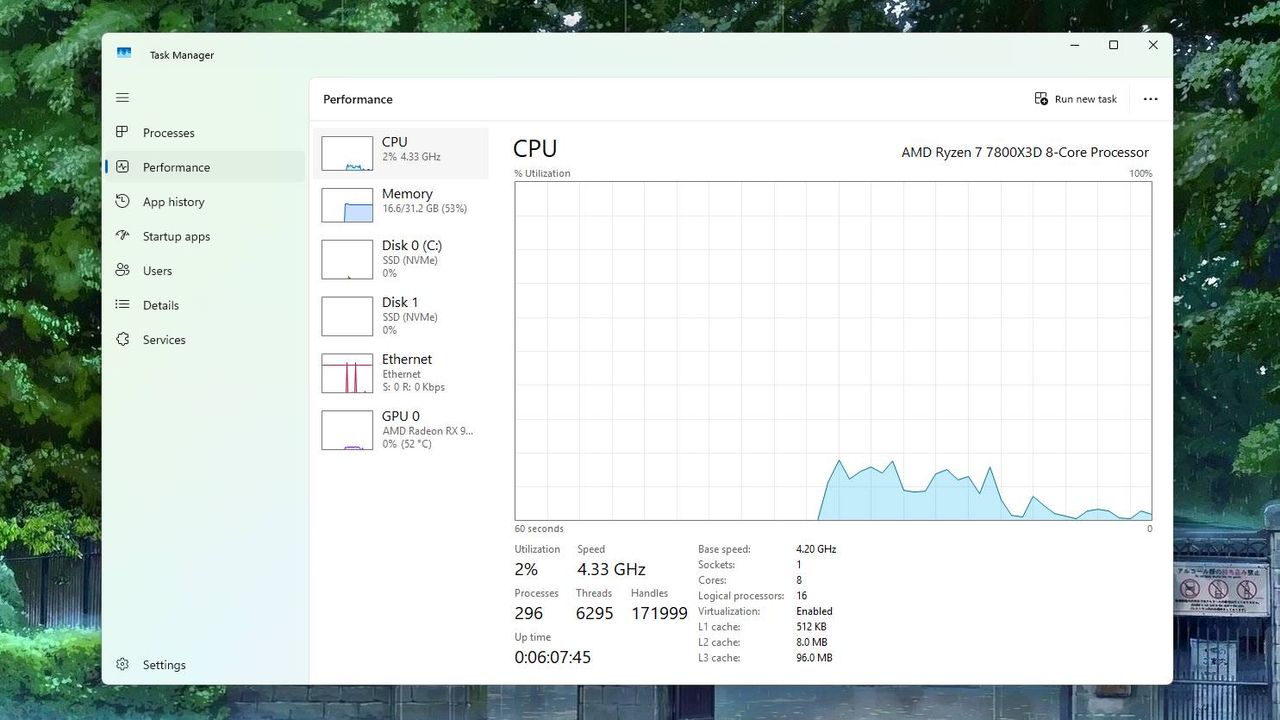
For years, users have questioned the accuracy of Windows Task Manager CPU usage reporting on Windows 11. While recent debates focused on the app's reliance on base clocks, Dave Plummer—the creator of the original Task Manager—suggests the reality is much more complex. In a recent video, Plummer explains that the discrepancy stems from complicated "little lies" and "compromises" within the underlying calculations.
The Science Behind the Calculation
Microsoft recently announced a fix for this issue in a recent Preview build. The company stated: "We are changing the way Task Manager calculates CPU utilization for the Processes, Performance, and Users pages. Task Manager will now use the standard metrics to display CPU workload consistently across all pages and aligning with industry standards and third-party tools."
After being sent his original source code by Microsoft, Plummer provided deeper insight into why Windows Task Manager CPU usage can feel unreliable. He noted that the calculation does not happen for every GUI refresh, as that would be inconsistent. Instead, the metric tracks how much total CPU time was actually consumed by all processes between the last sample and the current one.
Why Windows Task Manager CPU Usage Feels Inaccurate
The primary issue, according to Plummer, is the heavy use of averaging. He describes the figure in Task Manager as "a moving little obituary for the immediate past." The number reflects what happened over the previous refresh window rather than a real-time snapshot of the exact moment you look at it.
This creates several technical hurdles:
- Diluted Spikes: If a process goes "berserk" for 100 milliseconds and then sleeps, Task Manager may show a rounded zero because the work was diluted over the entire interval.
- Hardware Complexity: Modern processors use features like dynamic frequency scaling, turbo boost, thermal throttling, and deep idle states.
- The Analogy Gap: Plummer compares the metric to how "full" a freeway is rather than how many miles were actually traveled, or the difference between bandwidth and speed.
Plummer notes that while the old Task Manager worked well when time was a decent proxy for work, today's hardware has made that connection much looser.
Usability vs. Precision
Ultimately, Plummer argues that Task Manager prioritizes being understandable for "normal humans" over pinpoint accuracy. He believes that "a performance tool that requires a graduate seminar before breakfast has already lost the room." To him, the current approach is cheap, robust, and functional for the average user.
However, the tension between simplicity and transparency remains. Plummer has previously suggested that Windows "really does suck for some people" and proposed a separate "power user" mode to remove certain guardrails. Such a move could be vital in retaining users during the current migration of a significant minority of users toward Linux. Whether Microsoft's upcoming improvements will satisfy power users remains to be seen.