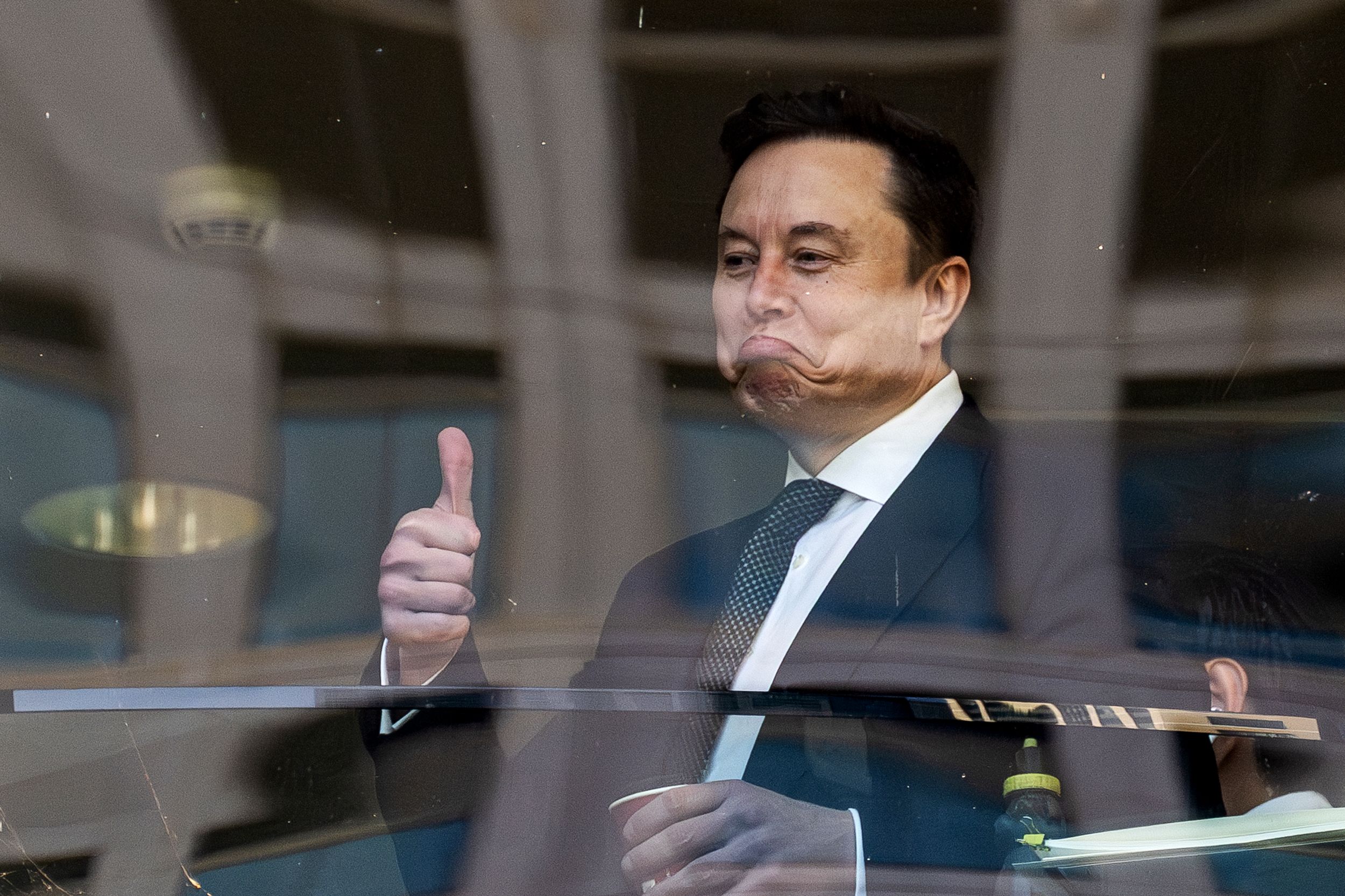
The line between competitive benchmarking and intellectual property infringement is blurring in the high-stakes world of generative AI. During recent testimony in the ongoing Musk v. Altman trial, Elon Musk seemingly admits xAI has used OpenAI’s models to train its own systems. While testifying in a federal court in Oakland, California, the Tesla CEO suggested that utilizing rival models is a foundational industry standard rather than an incidental practice.
The Oakland Disclosure: A Significant Admission
The tension peaked during intense cross-examination by OpenAI attorney William Savitt. The questioning centered on the concept of model distillation and whether xAI had utilized proprietary OpenAI technology to develop its software.
When asked directly if OpenAI's tech was used, Musk’s response was far from a denial. After defining distillation as the process of using one AI model to train another, Musk stated that "generally all the AI companies" engage in these practices.
When Savitt pushed for clarity on whether OpenAI technology specifically aided xAI's development, Musk replied, "Partly." He attempted to frame the usage within a professional context, asserting that it is "standard practice to use other AIs to validate your AI." This admission places xAI at the center of a heated debate regarding where legitimate validation ends and unauthorized repackaging begins.
How AI Model Distillation Works
To understand why this testimony has caused such friction, one must look at the technical implications of distillation. In the context of large language models (LLMs), distillation is a sophisticated technique used to create smaller, more efficient models that retain the "intelligence" of much larger predecessors.
The process typically involves several key stages:
- Teacher Model Selection: A high-performing, massive model (such as GPT-4) acts as the "teacher."
- Output Generation: The teacher model generates vast amounts of high-quality data, including reasoning chains and complex instructions.
- Student Training: A smaller, more computationally efficient model (the "student") is trained on this synthetic dataset to mimic the teacher's logic.
- Performance Optimization: The resulting student model runs faster and cheaper while maintaining a significant portion of the original capabilities.
While distillation can lead to rapid innovation, it poses an existential threat to companies relying on proprietary weights. If a competitor can replicate a model's "logic" without seeing its underlying code, the value of original R&D is significantly diluted.
The Rise of Defensive Engineering and Walled Gardens
The industry's reaction to this trend has been one of increasing isolationism. OpenAI has explicitly stated its commitment to "hardening" its models against extraction, especially as it faces pressure from foreign entities like the Chinese lab DeepSeek. This defensive posture signals a move toward closed-loop development across the entire AI ecosystem.
Recent history shows a pattern of competitors cutting off access to prevent their technology from being used as training fodder:
- In August 2025, Anthropic blocked OpenAI's access to its Claude coding models following alleged terms of service violations.
- More recently, Anthropic also severed xAI’s access to its specialized coding models.
This shift toward "walled gardens" suggests the era of open collaboration may be closing. The US government has even entered the fray, with officials like Michael Kratsios expressing a commitment to protecting American innovation from being appropriated by foreign actors through distillation.
The Verdict on AI Innovation
The legal battle between Musk and OpenAI will serve as a bellwether for the future of the industry. If the court finds that xAI's use of "validation" crossed the line into unauthorized training, it could set a precedent that stifles new players trying to benchmark against established giants.
Conversely, if Musk’s definition of standard practice holds, the industry must prepare for a landscape where intellectual property is increasingly difficult to defend. The outcome will determine whether the AI future is built on transparent competition or a series of increasingly guarded, proprietary fortresses.